Navigating 2026 Job Market: Essential Educational Pathways

The 2026 job market demands strategic educational pathways focused on high-growth sectors, emphasizing digital literacy, AI, and sustainable technologies for career readiness and advancement.
Are you ready for the future of work? Navigating the 2026 Job Market Education landscape requires foresight and strategic planning, as industries are rapidly evolving and demanding new skill sets. Understanding which educational pathways lead to high-growth sectors is crucial for anyone aiming for career longevity and success.
Understanding the Evolving 2026 Job Market
The job market in 2026 is not merely an extension of today’s; it’s a dynamic ecosystem shaped by technological advancements, global shifts, and changing societal priorities. Automation, artificial intelligence, and a heightened focus on sustainability are fundamentally altering job roles and creating entirely new opportunities. This evolution necessitates a proactive approach to education and skill development, moving beyond traditional career paths to embrace interdisciplinary knowledge and adaptability.
Understanding these shifts is the first step in preparing for a successful career. It’s no longer enough to specialize in a single field; professionals must possess a blend of technical expertise and soft skills that enable them to navigate complex challenges. The demand for critical thinking, problem-solving, and emotional intelligence will continue to grow alongside the need for specialized technical proficiencies.
Key Drivers of Change
- Technological Disruption: AI, machine learning, and automation are reshaping industries.
- Global Interconnectedness: Supply chain complexities and remote work trends are influencing talent acquisition.
- Sustainability Imperatives: A growing emphasis on green technologies and ethical business practices.
- Demographic Shifts: An aging workforce and evolving consumer behaviors impact service and product development.
The convergence of these factors means that educational institutions and individuals alike must continually assess and adapt their curricula and learning strategies. Remaining stagnant in a rapidly changing environment is a recipe for obsolescence, making continuous learning a cornerstone of career resilience in the 2026 job market.
Digital Literacy and AI Integration
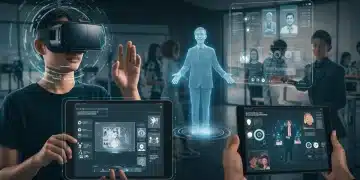
In the 2026 job market, digital literacy transcends basic computer skills; it encompasses a deep understanding of how digital tools and platforms operate and how to leverage them for innovation and efficiency. Artificial intelligence, in particular, is no longer a niche subject but a foundational element across virtually all high-growth sectors. From healthcare to finance, manufacturing to marketing, AI algorithms are driving decisions, automating tasks, and creating personalized experiences.
Educational pathways that integrate AI concepts, data analytics, and machine learning principles are becoming indispensable. This doesn’t mean everyone needs to be an AI developer, but rather that professionals must understand AI’s capabilities, limitations, and ethical implications. The ability to work alongside AI, interpret its outputs, and design human-AI collaboration frameworks will be highly valued.
Essential Digital Skills
- Data Science Fundamentals: Understanding data collection, analysis, and interpretation.
- AI/ML Concepts: Basic knowledge of algorithms, neural networks, and their applications.
- Cybersecurity Awareness: Protecting digital assets and understanding privacy regulations.
- Cloud Computing Proficiency: Working with cloud-based platforms and services.
Moreover, the integration of AI extends to creative fields, where AI-powered tools are assisting in content creation, design, and even strategic planning. Therefore, educational programs must foster not only technical prowess but also the critical thinking necessary to question, evaluate, and responsibly apply these powerful technologies. This holistic approach ensures graduates are not just users of technology, but innovators who can shape its future applications.
Sustainable Technologies and Green Jobs
The global push towards sustainability is creating a massive wave of new opportunities, making sustainable technologies and green jobs a significant component of the 2026 job market. As climate change concerns intensify and regulations become stricter, industries are investing heavily in renewable energy, waste management, sustainable agriculture, and eco-friendly manufacturing processes. This paradigm shift requires a workforce equipped with specialized knowledge and skills to design, implement, and maintain these new systems.
Educational programs focusing on environmental engineering, renewable energy systems, sustainable urban planning, and green supply chain management are experiencing rapid growth. These fields demand a blend of scientific understanding, engineering principles, and an awareness of economic and social impacts. Professionals in these areas will be at the forefront of developing solutions that address some of humanity’s most pressing challenges, contributing to both environmental protection and economic prosperity.


Emerging Green Careers
- Renewable Energy Technician: Installing and maintaining solar panels, wind turbines.
- Environmental Consultant: Advising businesses on sustainable practices and compliance.
- Sustainable Product Designer: Creating eco-friendly products and packaging.
- Climate Data Analyst: Interpreting environmental data for policy and strategy.
Beyond the technical roles, there’s also a growing need for professionals who can integrate sustainability principles into business strategy, marketing, and policy-making. This means that even traditional roles are evolving to include a ‘green’ component, making sustainability literacy a valuable asset across all sectors. Educational institutions are responding by offering interdisciplinary programs that combine environmental science with business administration, public policy, or even digital marketing.
Healthcare Innovation and Biotechnology
Healthcare has always been a robust sector, but by 2026, it will be profoundly transformed by innovation and biotechnology. Advances in genomics, personalized medicine, telemedicine, and medical devices are creating a demand for a highly specialized workforce. The focus is shifting from reactive treatment to proactive prevention and customized care, driven by data and biotechnological breakthroughs. This requires professionals who are not only clinically proficient but also technologically savvy and adaptable to rapidly evolving scientific knowledge.
Educational pathways in biotechnology, bioinformatics, health informatics, and advanced nursing specializations are becoming critical. These fields offer diverse roles, from research scientists developing new therapies to data analysts optimizing patient care, and telehealth specialists expanding access to medical services. The intersection of biology, technology, and healthcare is particularly fertile ground for career growth, promising significant impact on human well-being.
High-Demand Healthcare Roles
- Bioinformatician: Analyzing biological data for medical research and drug discovery.
- Clinical Data Scientist: Using patient data to improve diagnoses and treatment outcomes.
- Telehealth Coordinator: Managing virtual healthcare services and platforms.
- Genetic Counselor: Guiding patients through genetic testing results and implications.
Furthermore, the ethical considerations surrounding these innovations are gaining prominence. Educational programs are increasingly incorporating bioethics, regulatory affairs, and patient privacy into their curricula, ensuring that future healthcare professionals are not only technically competent but also ethically responsible. The holistic development of professionals who can navigate complex medical and ethical landscapes will be essential for the continued progress of healthcare innovation.
Data Science and Analytics Expertise
Data is often called the new oil, and by 2026, the ability to extract value from it will be more critical than ever. Data science and analytics expertise are no longer confined to tech companies; they are fundamental across every industry looking to make informed decisions, optimize operations, and understand customer behavior. From retail to government, logistics to entertainment, organizations are hungry for professionals who can collect, process, analyze, and interpret vast datasets.
Educational pathways in data science, statistics, applied mathematics, and computer science with a focus on analytics are prime for career growth. These programs equip individuals with the tools and methodologies to turn raw data into actionable insights, driving strategic initiatives and fostering innovation. The demand spans various roles, from data analysts who clean and visualize data to machine learning engineers who build predictive models and data strategists who guide data-driven business transformation.
Key Data-Related Skills
- Statistical Modeling: Applying statistical methods to analyze data.
- Machine Learning Algorithms: Understanding and implementing predictive models.
- Data Visualization: Presenting complex data in an understandable format.
- Big Data Technologies: Working with tools like Hadoop, Spark, and cloud data platforms.
The importance of ethical data handling and privacy also cannot be overstated. Educational institutions are emphasizing data governance, regulatory compliance (like GDPR and CCPA), and responsible AI development within their data science curricula. This ensures that future data professionals are not only technically adept but also conscientious stewards of information, building trust and maintaining ethical standards in an increasingly data-driven world.
Creative Industries and Digital Content Creation
While technology often dominates discussions about future job markets, the creative industries and digital content creation sectors are also experiencing significant growth and transformation. As digital platforms proliferate and consumer demand for engaging content intensifies, there’s a burgeoning need for skilled professionals in areas like digital marketing, graphic design, animation, UX/UI design, and interactive media. The 2026 job market will reward those who can blend artistic talent with technological proficiency to create compelling digital experiences.
Educational pathways in digital media, communication studies, graphic design with a focus on digital tools, and user experience design are becoming increasingly relevant. These programs not only hone creative skills but also teach the technical aspects of digital production, audience engagement strategies, and platform-specific optimization. The ability to tell stories, build brands, and design intuitive interfaces in a digital-first world will be paramount.
In-Demand Creative Roles
- UX/UI Designer: Creating user-friendly and aesthetically pleasing digital interfaces.
- Digital Marketing Specialist: Developing and executing online marketing campaigns.
- Content Creator/Strategist: Producing engaging text, video, and audio content for various platforms.
- 3D Modeler/Animator: Designing and animating elements for games, films, and virtual reality.
The rise of generative AI tools also presents a unique challenge and opportunity for creative professionals. Educational institutions are now exploring how to teach students to leverage AI as a co-creator, enhancing efficiency and expanding creative possibilities, rather than seeing it as a replacement for human ingenuity. This adaptation ensures that future creative professionals are equipped to thrive in an AI-augmented creative landscape.
Lifelong Learning and Adaptability
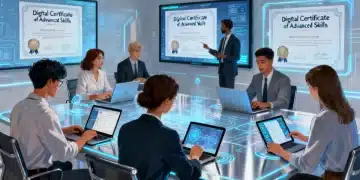
Perhaps the most critical educational pathway for the 2026 job market is the commitment to lifelong learning and adaptability. Given the rapid pace of change across all sectors, the skills acquired today may become obsolete tomorrow. Therefore, individuals must cultivate a mindset of continuous learning, regularly updating their knowledge and skill sets to remain relevant and competitive. This extends beyond formal education to include micro-credentials, online courses, workshops, and self-directed learning.
Educational institutions are increasingly emphasizing meta-skills such as critical thinking, problem-solving, collaboration, and emotional intelligence, as these are universally applicable and resilient to technological disruption. The ability to learn new things quickly, unlearn outdated concepts, and adapt to novel situations will be more valuable than any single technical skill. This ethos of continuous improvement and intellectual curiosity fosters resilience in the face of uncertainty.
Strategies for Continuous Learning
- Micro-credentials: Short, focused courses to acquire specific skills.
- Online Learning Platforms: Accessing a vast array of courses from top universities and experts.
- Professional Associations: Networking and staying updated on industry trends.
- Mentorship Programs: Gaining insights and guidance from experienced professionals.
Ultimately, the future belongs to those who are agile and proactive in their learning journey. Embracing a growth mindset and actively seeking out opportunities for skill development will not only open doors to new career possibilities but also ensure a fulfilling and impactful professional life in the ever-evolving 2026 job market. Educational pathways are no longer linear; they are dynamic journeys of continuous exploration and refinement.
| Key Focus Area | Brief Description |
|---|---|
| Digital & AI Literacy | Fundamental understanding and application of digital tools, AI, and data analytics across all sectors. |
| Sustainable Technologies | Specialized skills for green jobs in renewable energy, environmental engineering, and sustainable practices. |
| Healthcare & Biotech | Expertise in genomics, telemedicine, bioinformatics, and advanced medical innovations. |
| Lifelong Learning | Commitment to continuous skill acquisition, adaptability, and intellectual curiosity for career resilience. |
Frequently Asked Questions About the 2026 Job Market
High-growth sectors for 2026 include artificial intelligence, cybersecurity, renewable energy, biotechnology, and advanced healthcare. These areas are driven by rapid technological advancements and increasing global demand for sustainable and innovative solutions, requiring specialized skills and continuous learning.
Digital literacy is paramount, extending beyond basic computer skills to include data analytics, AI integration, and cloud computing. Proficiency in these areas enables professionals across all industries to leverage technology for efficiency, innovation, and strategic decision-making, making it a foundational requirement.
For green jobs, consider pathways in environmental engineering, renewable energy technologies, sustainable urban planning, and green supply chain management. These fields prepare individuals to develop and implement eco-friendly solutions, addressing environmental challenges and contributing to a sustainable economy.
While AI will automate many repetitive tasks, traditional jobs will evolve rather than disappear entirely. Roles requiring critical thinking, creativity, emotional intelligence, and complex problem-solving will remain crucial. The key is to adapt by acquiring skills that complement AI capabilities, fostering human-AI collaboration.
Lifelong learning is essential for career resilience in the dynamic 2026 job market. Continuously updating skills through micro-credentials, online courses, and professional development ensures adaptability to new technologies and industry demands, opening diverse opportunities and fostering sustained professional growth.
Conclusion
Navigating the 2026 job market effectively requires a strategic and proactive approach to education and skill development. The landscape is rapidly transforming, driven by technological innovations, sustainability imperatives, and evolving healthcare needs. By focusing on essential educational pathways in areas like digital literacy, AI integration, sustainable technologies, healthcare innovation, data science, and creative digital content, individuals can position themselves for success. Above all, cultivating a mindset of lifelong learning and adaptability will be the most crucial skill, ensuring career longevity and meaningful contributions in an ever-changing professional world. The future of work is not just about what you know, but how readily you can learn and adapt.