Upskilling in 2026: Acquire 2 Certifications in 6 Months

This article unveils a practical framework designed to help professionals achieve significant career advancement by acquiring two new certifications within a six-month period by 2026, emphasizing strategic planning and consistent effort.
In today’s rapidly evolving job market, the ability to adapt and acquire new skills is paramount. By 2026, professionals who strategically embrace upskilling 2026 certifications will undoubtedly stand out. This guide provides a practical framework to acquire two new certifications in just six months, offering a clear roadmap for your professional ascent.
Understanding the Need for Upskilling in 2026
The professional landscape is constantly reshaped by technological advancements, economic shifts, and changing industry demands. Remaining competitive often requires more than just foundational knowledge; it demands continuous learning and demonstrable expertise. Upskilling is no longer a luxury but a necessity for career longevity and growth.
By 2026, many roles will have evolved, necessitating new skill sets that current education might not fully address. Certifications serve as verifiable proof of these updated skills, signaling to employers that you are proactive and capable of meeting future challenges. They can open doors to new opportunities, promotions, and even entirely new career paths.
The Evolving Job Market and Skill Gaps
Automation and artificial intelligence are transforming industries, creating simultaneous demand for highly specialized skills and rendering some traditional roles obsolete. Identifying these emerging skill gaps is the first step toward effective upskilling.
- Digital Transformation: Expertise in cloud computing, cybersecurity, and data analytics is increasingly critical across all sectors.
- Soft Skills: Communication, problem-solving, and adaptability remain highly valued and often complement technical certifications.
- Industry-Specific Demands: Each industry has unique needs, from sustainable practices in manufacturing to advanced patient care technologies in healthcare.
Understanding these trends allows you to select certifications that are not only relevant today but will also remain valuable in the coming years. This foresight is crucial for maximizing your investment in time and resources. Ultimately, strategic upskilling ensures you are not just keeping pace, but leading the way in your field.
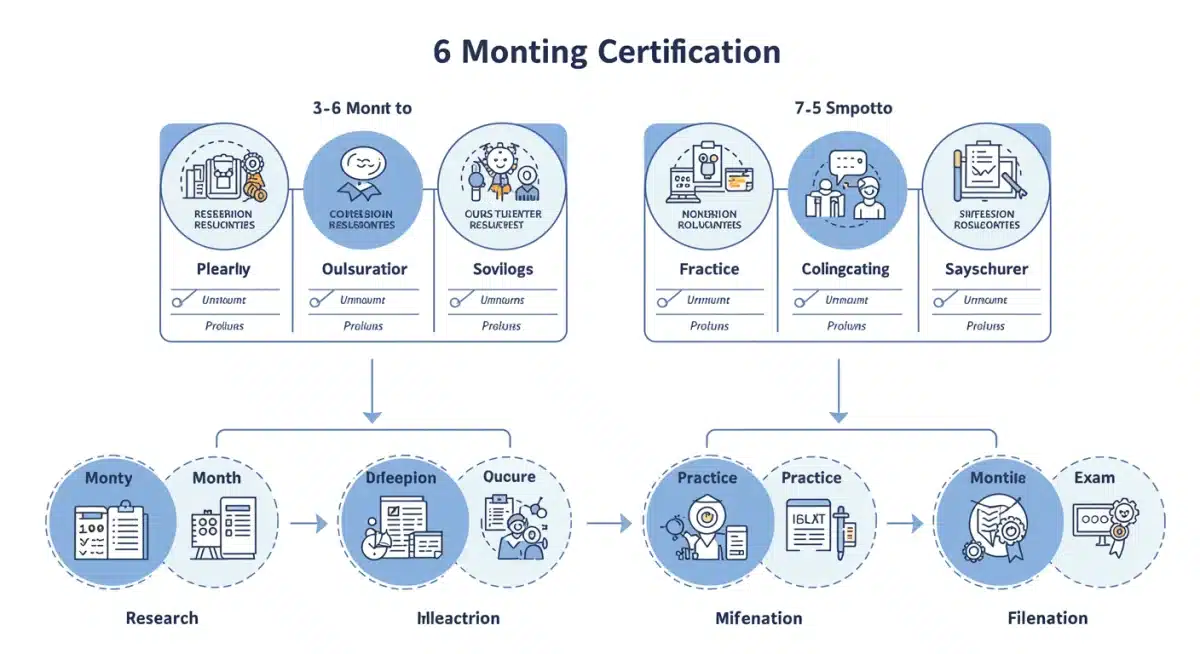
Phase 1: Strategic Planning and Certification Selection (Month 1)
The success of acquiring two certifications in six months hinges on meticulous planning. The first month is dedicated to research, self-assessment, and making informed decisions about which certifications will yield the greatest return on your investment of time and effort.
This phase involves identifying your career goals, understanding market demands, and selecting certifications that align perfectly with both. Without a clear strategy, you risk pursuing credentials that may not significantly advance your career objectives.
Identifying Your Career Goals and Market Demand
Start by reflecting on where you want to be professionally in the next 3-5 years. Do you aim for a promotion, a career change, or specialize further in your current role? Your certifications should be a direct pathway to these goals. Simultaneously, research current job market trends and predictions for 2026 and beyond. Look for skills that are consistently in high demand and projected to grow.
- Personal Assessment: Evaluate your current skills, strengths, and areas needing development. What existing knowledge can you leverage?
- Industry Research: Use platforms like LinkedIn, industry reports, and job boards to identify sought-after skills and common certification requirements.
- Future-Proofing: Prioritize certifications that address emerging technologies or methodologies, ensuring long-term relevance.
The goal is to find a sweet spot where your personal aspirations meet market opportunities. This ensures your certifications are not just academic achievements but powerful career accelerators.
Choosing the Right Certifications
Once you have a clear understanding of your goals and market demand, it’s time to select the specific certifications. Consider the difficulty, prerequisites, cost, and time commitment for each. Aim for one certification that builds upon your existing expertise and another that introduces a new, complementary skill set.
For example, if you are a project manager, one certification might be an advanced project management methodology (e.g., SAFe Agilist), while the second could be in data visualization or business intelligence to enhance your analytical capabilities. This combination makes you a more versatile and valuable asset.
Phase 2: Structured Learning and Time Management (Months 2-4)
With your certifications selected, the next three months are dedicated to intensive, structured learning. This phase requires discipline, effective time management, and the ability to absorb complex information efficiently. Breaking down each certification into manageable study blocks will be key to avoiding burnout and maintaining progress.
This period is about consistent effort, leveraging various learning resources, and adapting your study methods to suit the demands of each certification. Remember, the goal is not just to pass the exam, but to truly understand and apply the concepts.
Developing a Study Schedule for Each Certification
Create a detailed weekly study plan, allocating specific hours for each certification. Consistency is more important than cramming. Aim for shorter, focused study sessions rather than long, infrequent ones. Integrate your study schedule into your daily routine, treating it like any other important appointment.

- Allocate Time: Dedicate 10-15 hours per week per certification, spread across weekdays and weekends.
- Prioritize: Focus on areas where you feel less confident first.
- Flexibility: Be prepared to adjust your schedule as needed, but always strive to meet your weekly goals.
Utilize productivity tools and techniques like the Pomodoro Technique to maintain focus and prevent distractions. Remember to schedule breaks to avoid mental fatigue and enhance retention.
Leveraging Diverse Learning Resources
Don’t limit yourself to just one learning method. Combine textbooks, online courses, video tutorials, practice exams, and study groups. Each resource offers a different perspective and can help solidify your understanding of complex topics.
Many certification bodies offer official study guides and practice tests; these are invaluable for understanding the exam format and types of questions. Engaging with online communities or starting a study group can also provide peer support and opportunities for collaborative learning, making the process less isolating and more effective.
Phase 3: Practice, Review, and Exam Preparation (Month 5)
Month five is the crucial period for solidifying your knowledge and preparing specifically for the certification exams. This phase shifts from initial learning to intensive review, practice testing, and identifying any remaining knowledge gaps. Effective preparation during this month can significantly increase your chances of success.
It’s not enough to just know the material; you must also be proficient in applying that knowledge under exam conditions. This means practicing time management during tests and understanding the nuances of question types.
Intensive Practice Exams and Mock Tests
Regularly taking practice exams is perhaps the most effective way to prepare. These tests simulate the actual exam environment, helping you become familiar with the format, timing, and question styles. Analyze your results thoroughly to identify weak areas and focus your remaining study efforts.
- Simulate Conditions: Take practice tests under timed conditions to build stamina and manage stress.
- Review Explanations: Understand why correct answers are correct and why incorrect answers are wrong.
- Track Progress: Monitor your scores and improvement over time to gauge readiness.
Don’t be discouraged by low scores initially. Use them as diagnostic tools to guide your final weeks of study. The goal is continuous improvement, not perfection from the start.
Targeted Review and Gap Analysis
Based on your practice exam results, conduct a targeted review of the topics where you consistently struggle. Revisit course materials, watch relevant videos, or seek clarification from study partners or online forums. This focused approach ensures you are efficiently addressing your weaknesses rather than passively re-reading everything.
Create flashcards for key terms, formulas, or concepts that you find difficult to remember. Explain complex topics aloud to yourself or a study partner, as teaching can reinforce your own understanding. A systematic approach to review ensures that no critical knowledge gap remains unaddressed as you approach exam day.
Phase 4: Exam Execution and Post-Certification Strategy (Month 6)
The final month is dedicated to successfully taking your certification exams and planning your next steps. This phase involves managing exam day logistics, maintaining a positive mindset, and strategizing how to leverage your new credentials for career advancement. The journey doesn’t end with passing the exam; it begins there.
A well-executed exam day, followed by a clear plan for applying your new skills, will maximize the impact of your six-month effort. This is where your hard work truly begins to pay off.
Exam Day Strategies and Mindset
On exam day, ensure you are well-rested, hydrated, and have eaten a balanced meal. Arrive early at the testing center to avoid any last-minute stress. During the exam, read each question carefully, manage your time effectively, and don’t dwell too long on a single difficult question. Trust your preparation.
- Stay Calm: Practice deep breathing exercises if you feel anxious.
- Time Management: Allocate time per question and stick to it.
- Review Answers: If time permits, review all your answers before submitting.
Maintain a positive and confident mindset. You’ve put in the work, and you are ready. Visualize success, and approach the exam with a clear and focused mind.
Leveraging Your New Certifications
Once you’ve successfully acquired your certifications, update your resume, LinkedIn profile, and professional portfolios immediately. Announce your achievements to your network, both online and offline. Actively seek opportunities within your current role or externally that allow you to apply your new skills.
Consider contributing to open-source projects, volunteering, or mentoring others to further solidify your expertise. These actions not only demonstrate your proficiency but also expand your professional network and open doors to unforeseen opportunities. Your certifications are powerful tools; use them strategically to propel your career forward.
Overcoming Challenges and Maintaining Momentum
Pursuing two certifications in six months is an ambitious goal, and you will inevitably encounter challenges. These could range from motivation dips to unexpected personal or professional interruptions. The ability to anticipate and effectively navigate these obstacles is crucial for maintaining momentum and achieving your objectives.
Successful upskilling isn’t just about learning; it’s also about resilience and strategic problem-solving. Developing coping mechanisms and a strong support system will be invaluable during this intensive period.
Strategies for Staying Motivated
Motivation can ebb and flow. To stay on track, set smaller, achievable milestones and celebrate each one. Reward yourself for reaching study goals, no matter how small. Remind yourself of your long-term career aspirations and how these certifications contribute to them.
- Set Realistic Goals: Break down large tasks into smaller, manageable steps.
- Find an Accountability Partner: Study with a friend or colleague to keep each other motivated.
- Track Progress Visually: Use a calendar or progress tracker to see how far you’ve come.
Remember why you started. Connect with other professionals who are also upskilling; their shared experiences and encouragement can be a powerful motivator. A positive mindset and a clear vision of your goals will help you push through difficult times.
Dealing with Setbacks and Unexpected Obstacles
Life happens, and sometimes even the best-laid plans go awry. If you face a setback, such as failing a practice exam or experiencing a personal emergency, don’t let it derail your entire plan. Take a moment to reassess, adjust your schedule, and learn from the experience.
It’s important to be flexible and forgiving with yourself. A temporary delay is not a failure; it’s an opportunity to refine your approach. Seek support from mentors, friends, or family if you feel overwhelmed. The key is to adapt, not to give up, and to always keep your ultimate goal in sight. Resilience is a critical component of any successful upskilling journey.
Long-Term Benefits of Strategic Upskilling
While the immediate goal is to acquire two certifications in six months, the benefits of this strategic upskilling extend far beyond the initial achievement. Investing in your skills through certifications is an investment in your long-term career resilience, adaptability, and earning potential. It positions you as a forward-thinking professional in a dynamic global economy.
These benefits compound over time, creating a virtuous cycle of continuous learning and career growth. Understanding this long-term impact can provide additional motivation throughout your six-month journey and beyond.
Enhanced Career Opportunities and Earning Potential
Certifications are often directly linked to higher salaries and more advanced job roles. They provide tangible proof of specialized knowledge and skills that employers value. With two new certifications, you become a more attractive candidate for promotions, new positions, and even leadership roles.
Many certifications are recognized globally, opening up international career opportunities. Furthermore, the knowledge gained through upskilling often translates into increased efficiency and innovation in your current role, making you an indispensable asset to your organization. This directly impacts your earning potential and job security.
Cultivating a Growth Mindset and Adaptability
Beyond the specific skills acquired, the process of pursuing certifications cultivates a powerful growth mindset. It reinforces the idea that learning is a continuous journey and that challenges are opportunities for development. This adaptability is perhaps the most valuable skill in an unpredictable future job market.
By successfully completing this intensive six-month program, you will not only have new credentials but also a stronger sense of self-efficacy and a proven ability to set and achieve ambitious goals. This growth mindset will serve you well in all aspects of your professional and personal life, enabling you to confidently navigate future changes and embrace new learning endeavors.
| Key Point | Brief Description |
|---|---|
| Strategic Selection | Align certifications with career goals and market demand for maximum impact. |
| Structured Learning | Develop a detailed study plan and utilize diverse resources consistently. |
| Intensive Practice | Regularly take mock exams to identify gaps and build exam readiness. |
| Leverage Credentials | Update profiles and seek opportunities to apply new skills for career growth. |
Frequently Asked Questions About Upskilling in 2026
Upskilling is essential by 2026 because the job market is rapidly changing due to technological advancements and evolving industry demands. New certifications demonstrate updated skills, keeping you competitive and opening doors to new opportunities and career growth.
Begin by aligning certifications with your long-term career goals and researching current market demands. Look for skills that are in high demand and projected to grow. Consider one certification that builds on existing strengths and another that introduces a complementary new skill for versatility.
Develop a detailed weekly study plan, allocating specific hours for each certification. Prioritize consistency with shorter, focused sessions over infrequent, long ones. Utilize productivity techniques like the Pomodoro Technique and integrate study into your daily routine to maintain momentum.
Practice exams are critically important. They simulate the actual test environment, helping you familiarize yourself with the format, questions, and timing. Analyzing your results helps identify weak areas for targeted review, significantly increasing your chances of passing on the first attempt.
Immediately update your professional profiles, like LinkedIn and your resume. Actively seek opportunities to apply your new skills within your current role or by pursuing new positions. Network with peers and consider mentoring others to solidify your expertise and expand your professional reach.
Conclusion
Embarking on a journey to acquire two new certifications in six months by 2026 is a challenging yet profoundly rewarding endeavor. This practical framework emphasizes strategic planning, disciplined execution, and continuous adaptation. By meticulously selecting relevant certifications, adhering to a structured study schedule, and effectively preparing for exams, professionals can significantly enhance their career trajectory. The long-term benefits extend beyond new credentials, fostering a resilient growth mindset that is invaluable in an ever-changing professional landscape. Your proactive investment in upskilling today will undoubtedly unlock a wealth of opportunities and ensure your relevance and success in the years to come.