Future-Proof Your Career: Essential Skills for 2026 Job Market Success

The landscape of work is undergoing a profound transformation, driven by rapid technological advancements, evolving economic models, and shifting societal expectations. As we gaze towards 2026, the traditional notions of employment and career progression are being reshaped, demanding a proactive and adaptive approach from individuals and organizations alike. The key to thriving in this dynamic environment lies in understanding and acquiring the future job skills that will define success. This comprehensive guide delves into the critical competencies, emerging trends, and strategic approaches to continuing education necessary to navigate and excel in the job market of tomorrow.
The rapid pace of innovation, particularly in areas like artificial intelligence, automation, and data science, is not merely altering job descriptions; it’s creating entirely new roles while rendering others obsolete. This phenomenon, often termed the ‘Fourth Industrial Revolution,’ necessitates a constant re-evaluation of one’s skill set. The days of acquiring a degree and relying on that knowledge for an entire career are long gone. Lifelong learning, continuous upskilling, and reskilling are no longer options but fundamental requirements for professional longevity. Understanding these changes and preparing for them is paramount for anyone aiming to secure a competitive edge in the 2026 job market.
This article will explore the specific future job skills that will be most in demand, ranging from technical proficiencies to crucial soft skills. We’ll examine how continuing education platforms and methodologies are adapting to meet these new demands, and offer practical advice on how you can strategically invest in your own development. Whether you are a recent graduate, a seasoned professional, or someone contemplating a career change, the insights provided here will equip you with the knowledge to make informed decisions about your professional future.
The Evolving Job Market: What to Expect by 2026
Before diving into specific skills, it’s crucial to understand the broader context of the 2026 job market. Several macro trends are converging to reshape employment. Firstly, globalization continues to foster interconnectedness, leading to increased competition but also new opportunities in international markets. Secondly, demographic shifts, such as an aging workforce in many developed nations and a burgeoning youth population in others, will influence labor supply and demand. However, the most significant drivers of change are technological.
Artificial Intelligence (AI) and machine learning are automating routine tasks across various industries, from manufacturing to customer service and even knowledge work. This doesn’t necessarily mean fewer jobs, but rather a shift in the nature of jobs. Roles requiring repetitive manual or cognitive tasks are most susceptible to automation, while those demanding creativity, critical thinking, complex problem-solving, and interpersonal skills are becoming more valuable. The integration of AI tools will also empower human workers, augmenting their capabilities and allowing them to focus on higher-value activities. Therefore, understanding how to work alongside AI, rather than being replaced by it, is a pivotal future job skill.
Data analytics is another field experiencing explosive growth. With the proliferation of digital devices and online interactions, an unprecedented amount of data is being generated. Professionals who can collect, analyze, interpret, and leverage this data to inform business decisions will be highly sought after. This extends beyond dedicated data scientists to virtually every role, as data literacy becomes a fundamental requirement for strategic thinking. The ability to make data-driven decisions is a core future job skill that will differentiate successful professionals.
The rise of the gig economy and remote work models, accelerated by recent global events, is also transforming how and where work gets done. Flexibility, self-management, and the ability to work effectively in distributed teams are becoming standard expectations. Companies are increasingly valuing outcomes over traditional office presence, opening up new opportunities for individuals with specialized skills who can deliver results independently. Adapting to these new work structures requires a different set of organizational and communication future job skills.
Technical Proficiency: The Non-Negotiable Core of Future Job Skills
In an increasingly digital world, a strong foundation in technical skills is indispensable. These are not limited to IT professionals but are becoming crucial for virtually every sector. Here are some of the most prominent technical future job skills:
- Artificial Intelligence and Machine Learning Literacy: While not everyone needs to be an AI developer, understanding the fundamentals of AI, its applications, ethical implications, and how to effectively use AI-powered tools (e.g., generative AI, predictive analytics platforms) will be critical. This includes knowing how to prompt AI effectively, interpret its outputs, and integrate it into workflows.
- Data Science and Analytics: The ability to collect, clean, analyze, visualize, and interpret large datasets is paramount. This involves familiarity with tools like Python, R, SQL, and data visualization software (e.g., Tableau, Power BI). Data literacy is no longer just for analysts; it’s a foundational skill for strategic decision-making across all departments.
- Cybersecurity: As more aspects of our lives and businesses move online, the threat of cyberattacks grows. Professionals with cybersecurity expertise will be in extremely high demand to protect sensitive data and critical infrastructure. Even non-IT roles will require basic cybersecurity awareness and best practices.
- Cloud Computing: Many organizations are migrating their infrastructure and applications to cloud platforms (e.g., AWS, Azure, Google Cloud). Understanding cloud architecture, deployment, and management is a valuable skill for IT professionals and increasingly relevant for developers and even business strategists.
- Digital Marketing and E-commerce: With consumer behavior shifting predominantly online, expertise in digital marketing strategies (SEO, SEM, content marketing, social media marketing) and e-commerce platforms is vital for businesses seeking to reach and engage their target audiences. This area constantly evolves, requiring continuous learning of new tools and algorithms.
- Programming and Coding (Basic to Advanced): While not every job will require advanced coding, a foundational understanding of programming logic and perhaps even proficiency in a language like Python or JavaScript can open doors to various opportunities, from automation to web development and data manipulation.
- Automation and Robotics: As automation becomes more prevalent, skills in designing, implementing, and maintaining automated systems and robotic processes will be essential. This includes understanding Robotic Process Automation (RPA) and industrial automation technologies.
Investing in these technical future job skills through certifications, online courses, and practical projects will significantly enhance your employability and career trajectory by 2026. These skills are often quantifiable and directly demonstrate value to employers, making them excellent candidates for focused continuing education efforts.
The Indispensable Soft Skills: Human-Centric Future Job Skills
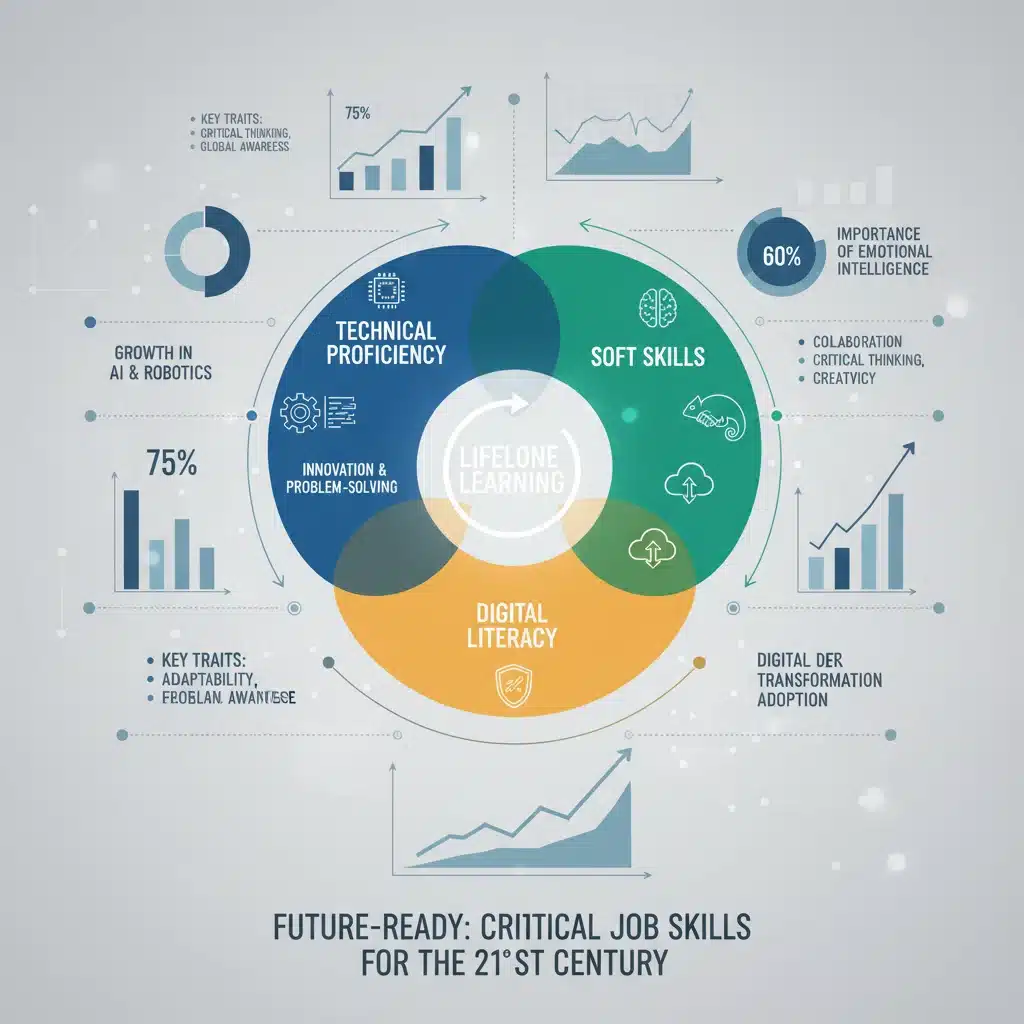
While technical skills are crucial, they are often insufficient on their own. The very nature of automation means that tasks requiring uniquely human attributes will become even more valuable. These ‘soft skills’ or ‘power skills’ are often harder to quantify but are absolutely essential for collaboration, innovation, and leadership. Neglecting these human-centric future job skills would be a significant oversight.
- Critical Thinking and Complex Problem-Solving: With access to vast amounts of information and increasingly complex challenges, the ability to analyze situations, evaluate evidence, identify root causes, and develop innovative solutions is paramount. This goes beyond simply finding answers; it involves asking the right questions and challenging assumptions.
- Creativity and Innovation: As routine tasks are automated, the demand for original thought, new ideas, and imaginative solutions will soar. Businesses need individuals who can think outside the box, develop new products, services, and processes, and adapt to unforeseen circumstances. Creativity is a cornerstone of competitive advantage.
- Adaptability and Resilience: The only constant is change. The 2026 job market will demand professionals who can quickly adapt to new technologies, workflows, and organizational structures. Resilience – the ability to bounce back from setbacks and maintain effectiveness under pressure – will also be a highly valued trait.
- Emotional Intelligence (EQ): Understanding and managing one’s own emotions, and accurately perceiving and influencing the emotions of others, is vital for effective teamwork, leadership, and customer relations. High EQ fosters better communication, conflict resolution, and a positive work environment.
- Collaboration and Teamwork: Most significant achievements in modern workplaces are the result of collaborative efforts. The ability to work effectively with diverse teams, both in-person and remotely, share knowledge, and contribute to collective goals is a non-negotiable future job skill.
- Communication: Clear, concise, and persuasive communication – both written and verbal – remains a fundamental skill. This includes active listening, presenting complex ideas simply, and tailoring messages to different audiences. In a globalized and remote work environment, cross-cultural communication skills are also increasingly important.
- Leadership and Influence: Regardless of your formal title, the ability to inspire, motivate, and guide others will be crucial. This involves not just managing tasks but also fostering a positive culture, mentoring colleagues, and driving change through influence rather than authority.
- Digital Literacy and Citizenship: Beyond technical proficiency, digital literacy encompasses understanding the implications of technology, navigating online information critically, and practicing responsible digital behavior. It’s about being a savvy and ethical participant in the digital world.
These soft future job skills are often developed through experience, mentorship, and self-reflection, but they can also be honed through specialized training, workshops, and even online courses focusing on communication, leadership, and emotional intelligence. Prioritizing their development is an investment in your long-term career success.
The Role of Continuing Education in Acquiring Future Job Skills
Given the pace of change, relying solely on initial academic qualifications is no longer sufficient. Continuing education has emerged as the primary mechanism for individuals to acquire and update their future job skills. This encompasses a wide array of learning opportunities beyond traditional degrees.
Formal Continuing Education Programs:
- Certifications and Micro-credentials: These are increasingly popular for validating specific technical skills (e.g., cloud certifications, data science specializations, project management certifications). They offer a focused, time-efficient way to gain recognized expertise in high-demand areas.
- Executive Education and Professional Development Courses: Universities and specialized institutions offer shorter, intensive programs designed for professionals to deepen their knowledge in specific domains or develop leadership skills. These are often tailored to industry needs.
- Graduate Degrees (Specialized): For those looking to make a significant career pivot or advance into highly specialized roles, a master’s or doctoral degree in emerging fields like AI ethics, bioinformatics, or advanced cybersecurity can be invaluable. However, the focus should be on practical application and industry relevance.
Informal and Self-Directed Learning:
- Online Learning Platforms (MOOCs): Platforms like Coursera, edX, Udemy, and LinkedIn Learning offer thousands of courses, specializations, and professional certificates in virtually every skill imaginable. These provide flexible and often affordable ways to learn at your own pace.
- Bootcamps: Intensive, short-term programs (typically 3-6 months) designed to rapidly train individuals in specific technical skills, such as web development, data science, or UX/UI design. They are highly practical and career-focused.
- Industry Conferences and Workshops: Attending these events provides opportunities to learn about the latest trends, network with peers, and gain insights from industry leaders. Many now offer virtual options, increasing accessibility.
- Reading and Research: Staying abreast of industry publications, academic papers, and thought leadership blogs is a simple yet effective way to continuously learn and identify emerging future job skills.
- Mentorship and Peer Learning: Learning from experienced professionals and collaborating with peers can accelerate skill development, especially for soft skills. Building a strong professional network is a form of continuous learning.
- On-the-Job Training and Special Projects: Actively seeking out opportunities within your current role to learn new tools, take on challenging projects, or cross-train in different departments is an excellent way to acquire new skills while gaining practical experience.
The key is to adopt a mindset of continuous learning. The most successful professionals in 2026 will be those who view learning not as a one-time event, but as an ongoing journey. This commitment to acquiring future job skills will be a significant differentiator.

Strategies for Acquiring and Demonstrating Future Job Skills
Identifying the right future job skills is only half the battle; effectively acquiring and demonstrating them is equally important. Here are some actionable strategies:
- Conduct a Skills Gap Analysis: Regularly assess your current skill set against the demands of your desired roles or industry trends. Identify areas where you need to upskill or reskill. Resources like the World Economic Forum’s ‘Future of Jobs’ reports can provide valuable insights.
- Prioritize Learning: With so many skills to acquire, it’s easy to feel overwhelmed. Focus on 2-3 critical skills that align with your career goals and have high market demand. Create a structured learning plan with realistic timelines.
- Embrace Project-Based Learning: The best way to learn a new skill is by applying it. Work on personal projects, contribute to open-source initiatives, or seek out opportunities at work that allow you to practice your new abilities. A portfolio of practical work is often more impactful than a list of completed courses.
- Network Strategically: Connect with professionals in your target fields. Informational interviews can provide insights into in-demand skills and potential career paths. Networking can also lead to mentorship opportunities and job referrals.
- Leverage Employer-Provided Training: Many companies are investing heavily in upskilling their workforce. Take advantage of any internal training programs, workshops, or tuition reimbursement benefits offered by your employer.
- Build a Personal Brand: Showcase your newly acquired future job skills through platforms like LinkedIn, personal websites, or blogs. Share your projects, insights, and certifications. This demonstrates your commitment to continuous learning and makes you visible to potential employers.
- Seek Feedback: Actively solicit feedback on your performance and skill development from supervisors, mentors, and peers. Constructive criticism is invaluable for identifying areas for improvement and refining your capabilities.
- Stay Curious and Adaptable: Cultivate a growth mindset. Be open to new ideas, technologies, and ways of working. The ability to unlearn old habits and embrace new paradigms will be a significant asset in the dynamic job market of 2026.
These strategies, when applied consistently, will not only help you acquire the necessary future job skills but also position you as a valuable and forward-thinking professional. The investment in your own development is the most secure investment you can make in your career.
The Impact of Future Job Skills on Different Industries
While the core future job skills discussed apply broadly, their specific manifestation and priority may vary by industry. Understanding these nuances is crucial for targeted skill development.
- Technology and IT: This sector will continue to lead in demand for advanced technical skills: AI/ML engineering, cybersecurity architecture, cloud solutions development, blockchain expertise, and quantum computing fundamentals. Soft skills like ethical AI development and cross-functional collaboration will also be paramount.
- Healthcare: The integration of AI in diagnostics, telemedicine, and personalized medicine will require healthcare professionals to develop digital literacy, data analysis skills (e.g., interpreting patient data from wearables), and ethical considerations for AI in patient care. Empathy and communication remain critical soft skills.
- Finance: Fintech innovations, blockchain, and AI-driven analytics are transforming the financial sector. Professionals will need skills in algorithmic trading, cybersecurity for financial data, data modeling, and understanding regulatory technology (RegTech). Critical thinking and risk assessment are more important than ever.
- Manufacturing and Engineering: Industry 4.0 demands skills in robotics, industrial IoT (IIoT), additive manufacturing (3D printing), and predictive maintenance. Engineers will need to combine traditional engineering principles with data science and automation expertise. Problem-solving and adaptability are key.
- Education: Educators will need to master digital pedagogy, leverage AI tools for personalized learning, and teach digital citizenship. Skills in curriculum design for future-ready students and fostering creative thinking will be highly valued. Adaptability to new teaching methods is crucial.
- Marketing and Sales: Data-driven marketing, AI-powered customer relationship management (CRM), and hyper-personalization will dominate. Skills in digital analytics, content strategy, SEO/SEM, and understanding consumer psychology in a digital age are essential. Persuasion and emotional intelligence remain vital.
- Creative Industries: While AI can generate content, human creativity, storytelling, and strategic oversight will be more critical. Artists, designers, and writers will need to learn to use AI as a tool to augment their creativity, develop unique concepts, and understand digital platforms for distribution. Originality and critical evaluation of AI outputs are key.
By specializing your learning efforts to align with your chosen industry’s specific needs, you can maximize the impact of your continuing education and ensure your future job skills are directly relevant and highly valued.
Conclusion: Embracing Continuous Learning for 2026 and Beyond
The 2026 job market will undoubtedly be characterized by accelerated change, technological integration, and a premium on uniquely human capabilities. The concept of future job skills is not a static list but a dynamic set of competencies that will continue to evolve. Professionals who thrive will be those who embrace a mindset of continuous learning, proactively identify skill gaps, and strategically invest in their personal and professional development.
The blend of technical proficiency – especially in areas like AI, data, and cybersecurity – with robust soft skills such as critical thinking, creativity, and emotional intelligence, will form the bedrock of career success. Continuing education, whether through formal certifications, online courses, or self-directed learning, is the vehicle through which these essential skills can be acquired and refined.
As you plan your career trajectory towards 2026 and beyond, remember that adaptability is your greatest asset. The ability to learn, unlearn, and relearn will not only future-proof your career but also open doors to exciting new opportunities and challenges. By prioritizing the development of these future job skills, you are not just preparing for the future; you are actively shaping it, ensuring your relevance and contribution in an ever-evolving world of work.
Start today by assessing your current skills, identifying areas for growth, and committing to a personalized learning journey. The future of work is not something to be feared, but an opportunity to grow, innovate, and redefine what’s possible in your professional life. The time to invest in your future job skills is now.