Boost Learning Retention: Data-Driven Academic Success Techniques

Boosting Your Learning Retention by 15%: Data-Driven Techniques for Academic Success
Are you tired of studying for hours only to forget most of what you learned days later? Do you wish there was a more effective way to make knowledge stick, not just for exams, but for long-term understanding and application? You’re not alone. The struggle with learning retention techniques is a common challenge for students and lifelong learners alike. In today’s information-rich world, simply consuming content isn’t enough; the real power lies in how well you retain and recall that information when you need it most. This comprehensive guide will delve into data-driven strategies designed to significantly boost your learning retention, potentially by as much as 15% or more, paving the way for unparalleled academic success.
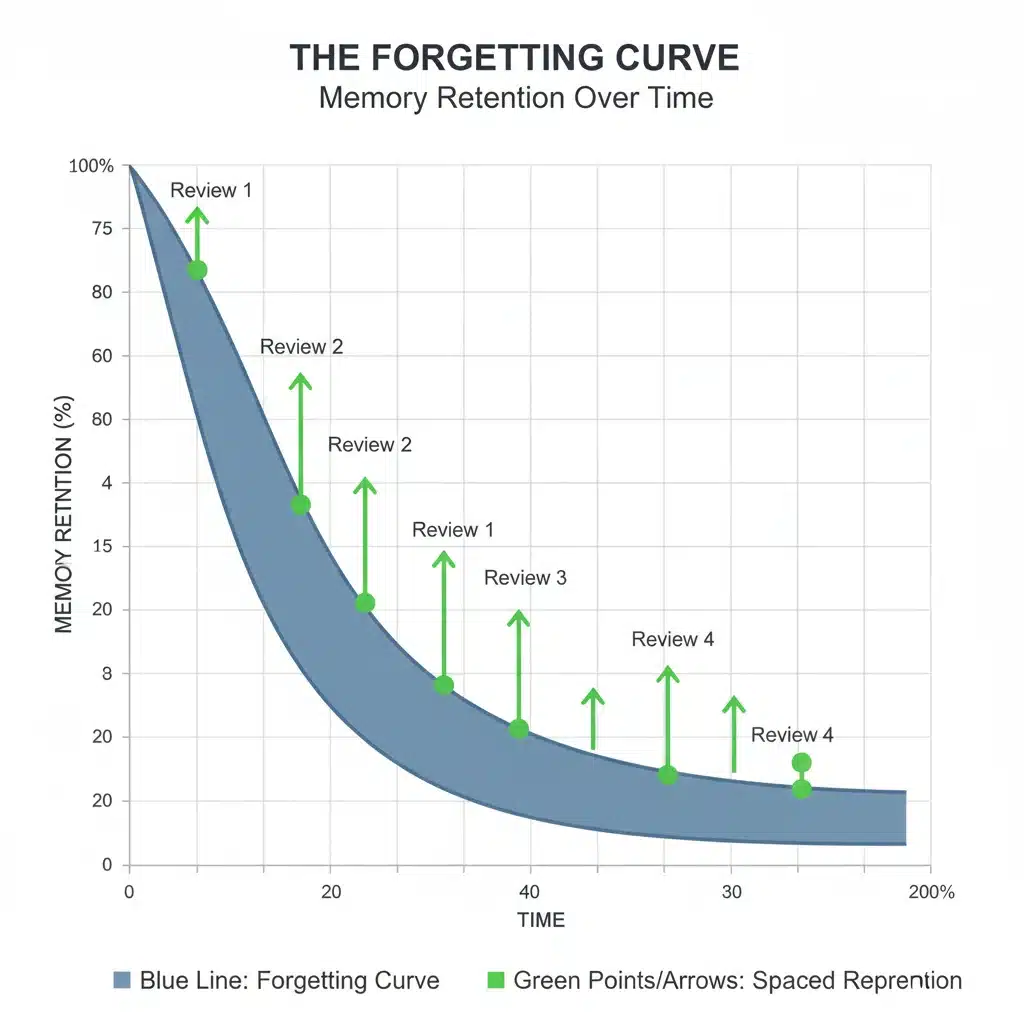
The human brain is an incredible organ, but its memory system isn’t always perfect. We often fall victim to the ‘forgetting curve,’ a concept introduced by Hermann Ebbinghaus, which illustrates how rapidly information is lost over time if not reinforced. However, modern cognitive science and educational psychology have provided us with a wealth of proven effective learning strategies that can counteract this natural decay. By understanding and applying these techniques, you can transform your study habits from passive consumption to active, long-lasting knowledge acquisition.
This article will explore the core principles behind effective memory and learning, introduce you to powerful data-driven techniques like spaced repetition and active recall, and provide actionable advice on how to integrate these methods into your daily study routine. Whether you’re preparing for a crucial exam, mastering a new skill, or simply aiming to learn more effectively, these insights will equip you with the tools to solidify your understanding and achieve your academic goals.
Understanding the Science of Memory: Why We Forget and How to Remember
Before we dive into specific learning retention techniques, it’s crucial to understand the fundamental ways our memory works and why we often forget. Memory isn’t a single, monolithic entity; it’s a complex system involving multiple stages: encoding, storage, and retrieval.
Encoding: Getting Information In
Encoding is the initial process of converting sensory input into a form that can be stored in memory. Think of it like saving a file on your computer. If the file isn’t saved properly, you won’t be able to retrieve it later. Poor encoding is one of the primary reasons for forgetting. When we passively read or listen, we often engage in shallow encoding, meaning the information isn’t processed deeply enough to form strong memory traces. Effective encoding involves:
- Attention: You can’t remember what you don’t pay attention to. Minimizing distractions and focusing intently on the material is paramount.
- Elaboration: Connecting new information to existing knowledge. The more connections you make, the richer and more robust the memory trace.
- Organization: Structuring information logically, perhaps by creating outlines, mind maps, or categorizing concepts.
- Imagery: Creating mental pictures or visualizations of the information.
Storage: Keeping Information There
Once encoded, information needs to be stored. Our memory system has different stores: sensory memory (very brief), short-term memory (limited capacity, lasts seconds to minutes), and long-term memory (vast capacity, lasts days to a lifetime). The goal of effective learning is to move information from short-term to long-term memory and keep it accessible.
Retrieval: Getting Information Out
Retrieval is the process of accessing stored information. This is where active recall comes into play. The act of retrieving information strengthens the memory trace, making it easier to recall in the future. The more frequently and successfully you retrieve a piece of information, the more ingrained it becomes in your long-term memory.
The Forgetting Curve Revisited
Hermann Ebbinghaus’s forgetting curve demonstrates that we forget a significant portion of newly learned information very quickly, often within hours or days, if there’s no attempt to retain it. This decline isn’t linear; it’s steepest right after learning and then gradually levels off. The good news is that each time you revisit and actively recall information, the forgetting curve for that specific piece of knowledge becomes less steep, and the rate of decay slows down. This scientific understanding forms the bedrock of powerful learning retention techniques like spaced repetition.
Data-Driven Learning Retention Techniques: Proven Strategies
Now that we understand the ‘why’ behind forgetting, let’s explore the ‘how’ of remembering. These data-driven learning retention techniques are backed by extensive research in cognitive psychology and have been shown to significantly enhance long-term memory.
1. Spaced Repetition: Defeating the Forgetting Curve
Perhaps the most powerful and scientifically validated learning retention technique is spaced repetition. It directly addresses the forgetting curve by scheduling reviews of material at increasing intervals over time. Instead of cramming, which leads to temporary retention, spaced repetition ensures that you revisit information just as you’re about to forget it, thereby strengthening the memory trace each time.
How it Works:
- After initial learning, review the material shortly thereafter (e.g., 10 minutes later).
- Review again after a slightly longer period (e.g., 1 day later).
- Continue reviewing at progressively longer intervals (e.g., 3 days, 1 week, 2 weeks, 1 month).
The optimal intervals depend on the difficulty of the material and your individual learning speed. Fortunately, you don’t have to manage this manually. Software like Anki, Quizlet, and SuperMemo use algorithms to calculate and schedule your reviews automatically, making spaced repetition highly efficient. Studies consistently show that spaced repetition can dramatically improve recall and long-term retention compared to massed practice (cramming).
2. Active Recall: Testing Yourself to Learn More
Active recall, also known as retrieval practice, is another cornerstone of effective learning retention techniques. Instead of passively re-reading notes or textbooks, active recall involves actively trying to retrieve information from your memory. This could involve quizzing yourself, explaining concepts in your own words, or attempting to solve problems without referring to your notes.

Why it’s Effective:
- Strengthens Memory Traces: The act of retrieval itself strengthens the neural pathways associated with that memory, making it easier to access in the future.
- Identifies Gaps: When you struggle to recall something, it immediately highlights areas where your understanding is weak, allowing you to focus your study efforts.
- Enhances Transfer: Practicing retrieval in various contexts can improve your ability to apply knowledge in different situations.
How to Implement Active Recall:
- Flashcards: Create physical or digital flashcards. Don’t just read the answer; try to recall it before flipping.
- Practice Questions: Use end-of-chapter questions, past exams, or create your own.
- Self-Explanation: After reading a section, close your book and try to explain the main points aloud or write them down without looking.
- Feynman Technique: Pretend you’re teaching the concept to someone else. If you can’t explain it simply, you don’t understand it well enough.
Combining active recall with spaced repetition creates a synergistic effect, as you’re not only retrieving information but doing so at optimal intervals to combat forgetting. This is a powerful combination for boosting your learning retention techniques.
3. Elaborative Interrogation: Asking ‘Why?’ and ‘How?’
Elaborative interrogation is a learning retention technique that involves asking ‘why’ and ‘how’ questions about the material you’re learning. Instead of just memorizing facts, you seek to understand the underlying reasons, connections, and implications. This process forces you to integrate new information with existing knowledge, creating a deeper and more meaningful understanding.
Example:
- Instead of just memorizing ‘Photosynthesis produces oxygen,’ ask: ‘Why does photosynthesis produce oxygen? How is it a byproduct of the process? What is its role in the ecosystem?’
By engaging in elaborative interrogation, you’re not just storing isolated facts; you’re building a rich, interconnected web of knowledge. This makes the information more robust and easier to retrieve because you have multiple pathways to access it in your memory.
4. Interleaving: Mixing Up Your Study Topics
Interleaving is a less intuitive but highly effective learning retention technique. Instead of focusing on one topic for a long block of time (blocked practice), interleaving involves mixing different subjects, topics, or types of problems within a single study session. For example, instead of studying Chapter 1 of Math, then Chapter 2, then Chapter 3, you might study a bit of Math, then a bit of History, then some Science, and then return to Math.
Benefits of Interleaving:
- Discriminative Learning: It helps you distinguish between different types of problems or concepts, rather than applying the same solution blindly.
- Enhanced Problem Solving: It forces your brain to constantly switch gears and retrieve different strategies, improving your problem-solving flexibility.
- Better Long-Term Retention: Research suggests interleaving leads to better long-term retention and transfer of learning than blocked practice, even if blocked practice feels easier in the short term.
While it might feel less efficient initially, the cognitive challenge of interleaving ultimately leads to stronger, more flexible learning and significantly boosts your learning retention techniques.
5. Dual Coding: Combining Words and Images
Dual coding is a learning retention technique that leverages the power of both verbal and visual information. Our brains process these two types of information through different channels. By presenting information in both words and images, you create two distinct memory traces, making the information more memorable and easier to retrieve.
How to Apply Dual Coding:
- Diagrams and Infographics: Convert complex textual information into visual diagrams, flowcharts, or infographics.
- Mental Imagery: As you read, actively create mental images or scenarios in your mind.
- Sketches and Drawings: Even if you’re not an artist, simple sketches can help solidify concepts. Draw relationships, processes, or structures.
- Annotated Images: Use images in your notes and annotate them with key terms and explanations.
The key is not just to have images present, but to ensure they are meaningfully linked to the verbal information. This technique is particularly effective for subjects that involve processes, structures, or abstract concepts.
6. Specificity of Encoding and Context-Dependent Memory
The principle of specificity of encoding states that memory is best when the conditions at encoding (learning) match the conditions at retrieval (recall). This leads to the concept of context-dependent memory, where recalling information is easier when you are in the same environment or mental state as when you learned it.
Practical Applications:
- Study in a Similar Environment: If possible, study for an exam in a similar setting to where the exam will be held.
- Vary Study Locations: Paradoxically, while studying in a consistent environment can help, varying your study locations can make your memories less dependent on a single context, leading to more robust and flexible recall. This forces your brain to form more abstract connections to the material itself, rather than relying on environmental cues.
- Recreate Mental State: Try to recall the emotional or cognitive state you were in when you learned the material.
While you can’t always perfectly replicate exam conditions, being aware of this principle can help you optimize your study environment and mental approach to enhance your learning retention techniques.
Integrating Data-Driven Techniques into Your Study Routine
Knowing these learning retention techniques is one thing; effectively integrating them into your daily study routine is another. Here’s a practical guide to making these strategies work for you:
1. Plan Your Study Sessions Strategically
Gone are the days of aimless studying. Plan your sessions with specific goals and techniques in mind. Allocate time for initial learning, then schedule spaced review sessions. Use a planner or a digital calendar to mark your review dates.
2. Embrace Technology for Spaced Repetition
Don’t try to manage spaced repetition manually for complex subjects. Tools like Anki are free, powerful, and highly customizable. They track your learning progress and present flashcards at optimal intervals, taking the guesswork out of scheduling. This is a game-changer for maximizing learning retention techniques.
3. Make Active Recall Your Default Study Method
Whenever you encounter new information, immediately think about how you can test yourself on it. Convert headings into questions, summarize paragraphs in your own words, or create mini-quizzes. Make retrieval practice a habit, not an afterthought. This is arguably the most impactful of all learning retention techniques.
4. Don’t Just Read, Elaborate
As you read, pause frequently and ask yourself ‘why’ and ‘how’ questions. Challenge assumptions, seek connections, and try to explain concepts to an imaginary audience. This deep processing is essential for robust memory formation.
5. Mix It Up with Interleaving
When planning your study blocks, try to alternate between different subjects or topics. For example, if you have a two-hour study session, dedicate 45 minutes to Math, 45 minutes to History, and then return to Math for 30 minutes, perhaps tackling a different type of problem. This keeps your brain engaged and improves your ability to differentiate concepts.
6. Visualize and Draw
Whenever possible, translate verbal information into visual representations. Draw diagrams, sketch processes, or simply create strong mental images. Even abstract concepts can often be visualized metaphorically.
7. Prioritize Sleep and Nutrition
While not a direct learning technique, adequate sleep and good nutrition are critical for memory consolidation. During sleep, your brain processes and solidifies the information learned during the day. A well-nourished brain functions optimally, enhancing your ability to encode, store, and retrieve information efficiently. Neglecting these fundamental aspects will undermine even the best learning retention techniques.
8. Teach Others
The Feynman Technique is a testament to the power of teaching. When you explain a concept to someone else, you’re forced to organize your thoughts, simplify complex ideas, and identify gaps in your understanding. This is an extremely effective form of active recall and elaboration.
Measuring Your Progress and Adapting Your Approach
The ‘data-driven’ aspect of these learning retention techniques isn’t just about the scientific research behind them; it’s also about tracking your own progress and adapting your approach. How do you know if you’re actually boosting your retention by 15%?
- Self-Assessment: Regularly quiz yourself. Track your scores on practice tests. If you’re using Anki, pay attention to the ‘again’ count for cards you struggle with.
- Feedback Loops: Pay attention to feedback from assignments and exams. Where are you consistently making mistakes? These are areas where your retention techniques might need adjustment.
- Journaling: Keep a study journal. Note down what techniques you used for a particular topic and how well you performed on subsequent recall attempts. This can help you identify what works best for your individual learning style.
- Time Tracking: Monitor how much time you spend on active learning vs. passive learning. Aim to shift more towards active methods.
By consciously monitoring your learning outcomes, you can fine-tune your application of these learning retention techniques, ensuring you’re always optimizing for maximum effectiveness. Remember, learning is an iterative process, and continuous improvement is key.
Common Pitfalls to Avoid
Even with the best intentions, learners often fall into common traps that hinder their learning retention techniques. Be aware of these pitfalls:
- Passive Re-reading: Simply re-reading notes or textbooks without active engagement is one of the least effective study methods. It creates an illusion of knowing but doesn’t build strong memory traces.
- Highlighting Everything: Excessive highlighting or underlining without accompanying active processing is largely ineffective. If everything is highlighted, nothing stands out.
- Cramming: While it might provide short-term gains for an immediate test, cramming undermines long-term retention and deep understanding. It’s the antithesis of spaced repetition.
- Lack of Sleep: As mentioned, sleep is crucial for memory consolidation. Sacrificing sleep for more study time is often counterproductive.
- Multitasking: Trying to learn while simultaneously engaging in other activities (e.g., checking social media, watching TV) severely impairs encoding and retention.
- Overconfidence: The feeling of ‘knowing’ something after passively reviewing it can be misleading. Always test yourself actively to confirm true understanding.
Avoiding these common mistakes will create a more fertile ground for your learning retention techniques to flourish.
Conclusion: Unlock Your Full Learning Potential
Boosting your learning retention techniques by 15% or more is not an unattainable dream; it’s a measurable outcome achievable through the consistent application of data-driven strategies. By understanding how your memory works and consciously employing methods like spaced repetition, active recall, elaborative interrogation, interleaving, and dual coding, you can transform your learning journey.
These techniques move beyond rote memorization, fostering deeper understanding, critical thinking, and the ability to apply knowledge in diverse contexts. They empower you to become a more efficient, effective, and ultimately, more successful learner, whether in academic pursuits, professional development, or personal growth.
Start small, choose one or two techniques to implement, and gradually integrate more into your routine. Be patient with yourself, monitor your progress, and adapt as needed. The investment of effort into these scientifically-backed learning retention techniques will pay dividends in the form of robust knowledge, enduring skills, and a significant boost to your academic and personal success. Unlock your brain’s incredible potential and make learning a truly lasting experience.