Student Loan Forgiveness 2025: Eligibility & Application Guide
Understanding the landscape of US student loan forgiveness programs in 2025 is vital for borrowers seeking debt relief, requiring careful attention to eligibility and application procedures.
As 2025 approaches, understanding the nuances of student loan forgiveness 2025 programs becomes critically important for millions of Americans grappling with educational debt. This guide offers a comprehensive overview of current and upcoming opportunities, helping you determine eligibility and navigate the application process effectively.
Understanding the Current Landscape of Student Loan Forgiveness
The student loan landscape is constantly evolving, with new policies and program adjustments frequently introduced. For borrowers in the United States, staying informed about these changes is crucial for maximizing potential debt relief. Many existing programs continue to offer significant opportunities for forgiveness, provided you meet specific criteria and follow the correct application protocols.
Key Existing Forgiveness Programs
Several established programs remain pillars of student loan relief. These include options tailored for public service workers, teachers, and individuals facing specific financial hardships. Each program has unique requirements that borrowers must satisfy.
- Public Service Loan Forgiveness (PSLF): Designed for full-time employees of government or non-profit organizations.
- Teacher Loan Forgiveness (TLF): Provides relief for teachers working in low-income schools or educational service agencies.
- Income-Driven Repayment (IDR) Plan Forgiveness: Offers forgiveness of remaining balances after 20 or 25 years of qualifying payments.
Beyond these, there are specific discharge options for borrowers with total and permanent disabilities or those whose schools closed. Understanding the fine print of each program is the first step toward successful application. The Department of Education often updates guidelines, so regular checks on official websites are advised.
The complexity of these programs can be daunting, but with careful research and attention to detail, borrowers can identify the best path forward. Many programs require a consistent payment history under specific repayment plans, making early planning essential. Ensuring your loan type qualifies is also a critical early step, as not all federal loans are eligible for every program.
Eligibility Criteria for 2025 Programs: What You Need to Know
As we look towards 2025, eligibility criteria for student loan forgiveness programs continue to be a primary concern for borrowers. While some fundamental requirements remain consistent, potential changes and expansions mean that staying updated is more important than ever. Understanding these criteria will enable you to prepare your application effectively and avoid common pitfalls.
General Requirements Across Programs
Most federal student loan forgiveness programs share some common eligibility requirements. These typically involve the type of loan you hold, your employment status, and your repayment history. Federal Direct Loans are generally the most eligible, while FFEL Program loans and Perkins Loans might require consolidation into a Direct Loan to qualify.
- Loan Type: Primarily Federal Direct Loans. Others may need consolidation.
- Employment: Often requires full-time work in a qualifying sector (e.g., government, non-profit, specific teaching roles).
- Payment History: A record of on-time, qualifying payments under a specific repayment plan (e.g., IDR plans for PSLF).
Specific programs, like PSLF, demand 120 qualifying monthly payments while working for a qualifying employer. This means a decade of consistent commitment. For IDR plan forgiveness, the timeline extends to 20 or 25 years, depending on the plan and when you borrowed. The distinction between qualifying and non-qualifying payments is critical and often a source of confusion for borrowers.
Beyond federal programs, some states and private organizations offer their own loan repayment assistance programs (LRAPs). These often target specific professions or areas with high needs, such as healthcare professionals in underserved communities. Researching these localized options can provide additional avenues for relief, complementing federal programs or offering alternatives if federal criteria are not met. Always verify the source and legitimacy of any program you consider.
Application Process: Step-by-Step Guide for 2025
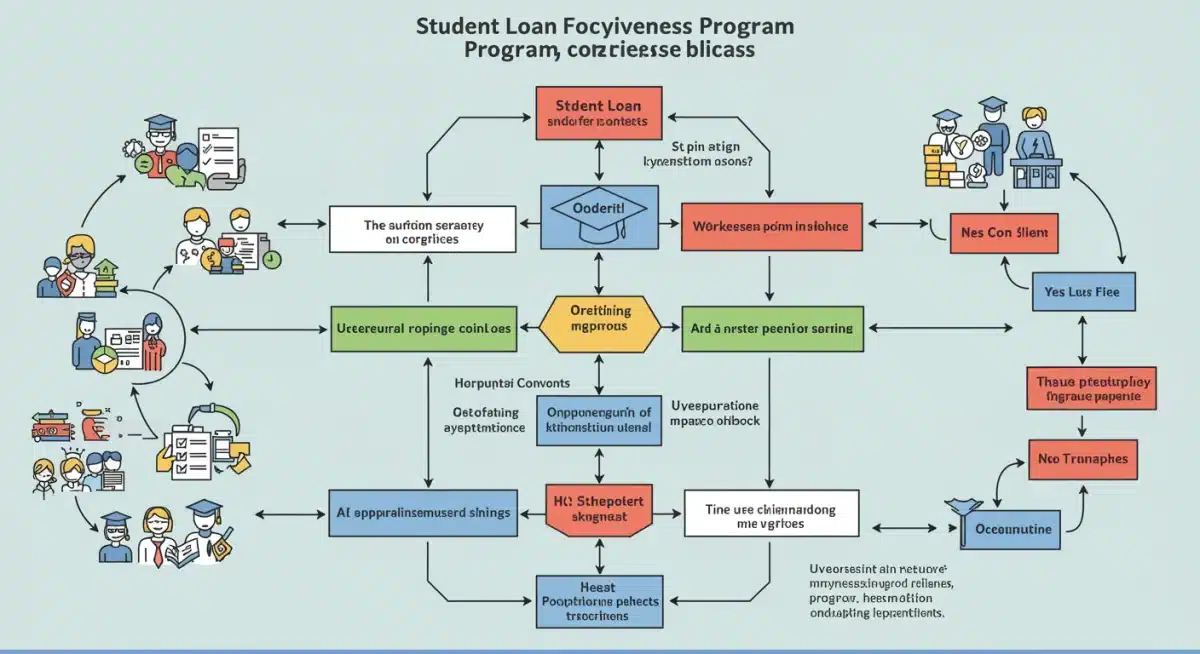
Applying for student loan forgiveness can seem complex, but breaking it down into manageable steps makes the process much clearer. For student loan forgiveness 2025, proactively preparing your documents and understanding the specific requirements for each program will be key to a successful application. This section provides a step-by-step guide to help you navigate the application journey.
Preparing Your Documents
Before you even begin filling out forms, gather all necessary documentation. This typically includes proof of employment, income verification, and official loan statements. Accuracy and completeness are paramount to avoid delays or rejection.
- Employment Certification Forms: Essential for PSLF, confirming your eligible employment.
- Income Documentation: Tax returns or pay stubs for Income-Driven Repayment plans.
- Loan Statements: Records of your loan balances and payment history.
Ensure that all forms are filled out meticulously and submitted within any specified deadlines. For PSLF, for example, it’s recommended to submit an Employment Certification Form annually or whenever you change employers to track your progress and confirm qualifying payments. This proactive approach can prevent issues down the line.
Submitting Your Application
Once your documents are ready, the submission process varies by program. Most federal programs use forms available on the Federal Student Aid (FSA) website. It’s crucial to submit through official channels to protect your personal and financial information. Always confirm receipt of your application and keep copies of everything you submit for your records.
For IDR plan forgiveness, you generally apply through your loan servicer. They will guide you on the specific forms and documentation needed to enroll in an IDR plan and track your progress towards forgiveness. Remember that forgiveness under IDR plans only occurs after a long period of qualifying payments, so consistent enrollment and annual recertification are vital.
Time-Sensitive Deadlines and Important Updates for 2025
The landscape of student loan forgiveness is dynamic, with various programs often having time-sensitive components or specific deadlines that borrowers must meet. For student loan forgiveness 2025, staying abreast of these dates and any new policy updates is essential to avoid missing out on potential relief. This section highlights critical deadlines and recent developments you should be aware of.
Key Deadlines to Watch
While some programs, like PSLF, have ongoing application periods, certain initiatives or waivers may have specific end dates. For instance, temporary expansions or adjustments to existing programs often come with limited-time application windows. Missing these deadlines can mean forfeiting significant opportunities for debt reduction.
- PSLF Waiver End Dates: If any new waivers are announced, pay close attention to their application deadlines.
- IDR Account Adjustment: Borrowers should monitor updates regarding the one-time IDR account adjustment, which aims to correct past administrative errors and bring more borrowers closer to forgiveness.
- Consolidation Deadlines: For borrowers with older loan types (FFEL, Perkins) who need to consolidate into Direct Loans to qualify for certain benefits, there may be specific deadlines to do so.
It is highly recommended to regularly check the official Federal Student Aid (FSA) website and your loan servicer’s communications for personalized updates. These official sources are the most reliable for accurate and timely information. Setting reminders for important dates can also be a helpful strategy to ensure you don’t miss any critical windows.
Beyond federal programs, state-specific or profession-specific loan repayment assistance programs (LRAPs) often have their own application cycles and deadlines. These can open and close at different times throughout the year, so if you are targeting a particular state or profession, research those programs individually and mark your calendar accordingly. Early planning and application are almost always beneficial.
Common Pitfalls and How to Avoid Them
Navigating the journey toward student loan forgiveness can be challenging, and many borrowers encounter common pitfalls that can delay or even prevent them from receiving relief. For student loan forgiveness 2025, being aware of these potential issues and taking proactive steps to avoid them is crucial. This section outlines frequent mistakes and provides actionable advice to ensure a smoother process.
Mistakes in Program Selection and Eligibility
One of the most common errors is applying for a program for which you don’t fully qualify or misunderstanding the eligibility requirements. This often stems from not thoroughly reviewing the program’s rules or relying on unofficial information. Each forgiveness program has distinct criteria, and a mismatch can lead to wasted time and effort.
- Incorrect Loan Type: Assuming all federal loans qualify for every program without checking.
- Non-Qualifying Employment: Believing your employer qualifies for PSLF when it does not meet the government or non-profit definition.
- Missed Payments/Wrong Repayment Plan: Not making qualifying payments under the correct income-driven repayment plan.
To avoid these issues, always verify your loan type through your loan servicer or the FSA website. If pursuing PSLF, use the PSLF Help Tool to confirm your employer’s eligibility. Enroll in the appropriate income-driven repayment plan if required, and ensure you make consistent, on-time payments. It is always better to double-check official sources than to rely on hearsay.
Another pitfall is failing to keep accurate records. Maintain a detailed log of all communications with your loan servicer, copies of submitted documents, and proof of payments. This meticulous record-keeping can be invaluable if discrepancies arise or if you need to appeal a decision. Being organized significantly reduces stress and improves your chances of a successful outcome.
Future Outlook and Potential Changes for 2025 and Beyond
The landscape of student loan forgiveness is subject to ongoing policy discussions and potential legislative changes. As we move into 2025, borrowers should be aware of possible future developments that could impact existing programs or introduce new opportunities for debt relief. Staying informed about these potential shifts is key to strategic financial planning.
Anticipated Policy Adjustments
Government administrations frequently review and propose changes to federal student aid policies. These can range from minor adjustments to existing programs to significant overhauls. For instance, discussions around simplifying income-driven repayment plans or expanding eligibility for certain forgiveness initiatives are ongoing. Keeping an eye on official announcements from the Department of Education and legislative bodies is paramount.
- Simplification of IDR Plans: Potential streamlining of IDR options to make them easier to navigate.
- Expanded Eligibility: Possibility of broadening the scope of qualifying employment or loan types for forgiveness.
- New Forgiveness Initiatives: While less frequent, new programs can emerge in response to economic conditions or policy priorities.
It’s important to differentiate between proposed changes and enacted policies. While proposals generate discussion, only official legislation or regulatory changes have a direct impact on borrowers. Relying on reputable news sources and government websites will help you distinguish between speculation and concrete policy updates.
The economic environment also plays a role in student loan policy. Inflation, employment rates, and overall economic stability can influence the government’s approach to student debt. Therefore, a holistic understanding of both policy discussions and broader economic trends can provide a more comprehensive picture of what to expect in the coming years regarding student loan forgiveness 2025 and beyond. Being prepared for various scenarios allows for greater financial resilience.
| Key Program | Brief Description |
|---|---|
| PSLF | For public service workers after 120 qualifying payments. |
| IDR Forgiveness | Remaining balance forgiven after 20-25 years of payments. |
| Teacher Loan Forgiveness | Up to $17,500 for qualifying teachers in low-income schools. |
| Disability Discharge | Total and permanent disability can lead to loan discharge. |
Frequently Asked Questions About Student Loan Forgiveness
Generally, federal student loans, particularly Direct Loans, are eligible. Other federal loans like FFEL Program loans and Perkins Loans may need to be consolidated into a Direct Loan to qualify for most forgiveness programs. Private student loans are typically not eligible for federal forgiveness programs.
You can use the PSLF Help Tool on the Federal Student Aid (FSA) website to determine if your employer is a qualifying government organization or a non-profit. It’s crucial to confirm this eligibility as it is a core requirement for the program.
Loan forgiveness typically refers to programs that cancel remaining loan balances after meeting specific criteria, like public service or income-driven repayment. Loan discharge usually applies to specific circumstances, such as total and permanent disability, school closure, or death.
Yes, borrowers enrolled in IDR plans must recertify their income and family size annually. Failing to do so can result in higher monthly payments and potentially lose credit for qualifying payments towards forgiveness. Your loan servicer will notify you when it’s time to recertify.
Generally, most federal student loan forgiveness under current programs, like PSLF, is not considered taxable income by the IRS. However, some types of forgiveness or discharge, particularly those outside of specific federal programs, might be taxable. It’s advisable to consult a tax professional.
Conclusion
Navigating the complex world of student loan forgiveness requires diligence, careful planning, and a commitment to staying informed. As we’ve explored, 2025 presents both ongoing opportunities and the potential for new developments in federal and state programs. By understanding eligibility requirements, meticulously preparing applications, and adhering to time-sensitive deadlines, borrowers significantly increase their chances of achieving substantial debt relief. Proactive engagement with official resources and a clear understanding of your specific loan situation are your best tools in this journey, ultimately paving the way for a more secure financial future free from the burden of student debt.