Maximize Your 2026 IRA Contributions: Strategies to Hit the $7,000 Limit

Maximize Your 2026 IRA Contributions: Strategies to Hit the $7,000 Limit Before April 15th
Are you looking to supercharge your retirement savings and take full advantage of tax-advantaged investment opportunities? The Individual Retirement Arrangement (IRA) is a cornerstone of smart financial planning, offering significant benefits for long-term growth. For 2026, the contribution limit for IRAs is set at an impressive $7,000 for those under 50, and an even more generous $8,000 for individuals aged 50 and over (including the $1,000 catch-up contribution). But merely knowing the limit isn’t enough; the real challenge lies in strategically planning and executing your contributions to ensure you hit that maximum, especially with the looming April 15th deadline for the prior year’s contributions.
This comprehensive guide will delve deep into the world of IRAs, providing you with actionable strategies to maximize IRA contributions for 2026. We’ll explore the nuances of Traditional and Roth IRAs, discuss eligibility requirements, and offer practical tips to integrate IRA contributions seamlessly into your financial routine. Whether you’re a seasoned investor or just starting your retirement journey, understanding how to effectively utilize your IRA can make a substantial difference in your financial future.
Don’t let valuable tax benefits and potential investment growth slip through your fingers. By the end of this article, you’ll have a clear roadmap to ensure you’re making the most of your 2026 IRA opportunities.
Understanding the 2026 IRA Contribution Limits and Deadlines
Before we dive into strategies, it’s crucial to have a firm grasp of the fundamental rules governing IRA contributions for the 2026 tax year. The Internal Revenue Service (IRS) sets these limits annually, and they are critical for your financial planning.
The Core Contribution Limits
- Under 50: For individuals who will be under the age of 50 by the end of 2026, the maximum contribution you can make to your IRA is $7,000. This limit applies across all your IRAs (Traditional, Roth, or a combination).
- Age 50 and Over (Catch-Up Contributions): If you are aged 50 or older by the end of 2026, you are eligible to make an additional catch-up contribution of $1,000. This brings your total possible contribution to $8,000. This provision is designed to help those closer to retirement bolster their savings.
The All-Important Deadline: April 15th
One of the most common misconceptions about IRA contributions is that they must be made within the calendar year they apply to. While contributing throughout the year is an excellent strategy, the IRS provides a crucial extension. You can make contributions for the 2026 tax year up until the tax filing deadline for that year, which is typically April 15th, 2027. This means you have a significant window – from January 1, 2026, to April 15, 2027 – to maximize IRA contributions for 2026. This extended deadline can be a lifesaver for those who need a little more time to gather funds or make financial adjustments.
Key Considerations for the Deadline:
- Weekends and Holidays: If April 15th falls on a weekend or holiday, the deadline is typically pushed to the next business day.
- State Holidays: State holidays can also sometimes affect the federal tax deadline, so always double-check the exact date for your specific year.
- Procrastination Pitfalls: While the extension is helpful, waiting until the last minute can lead to missed opportunities. Earlier contributions mean more time for your investments to grow through compounding.
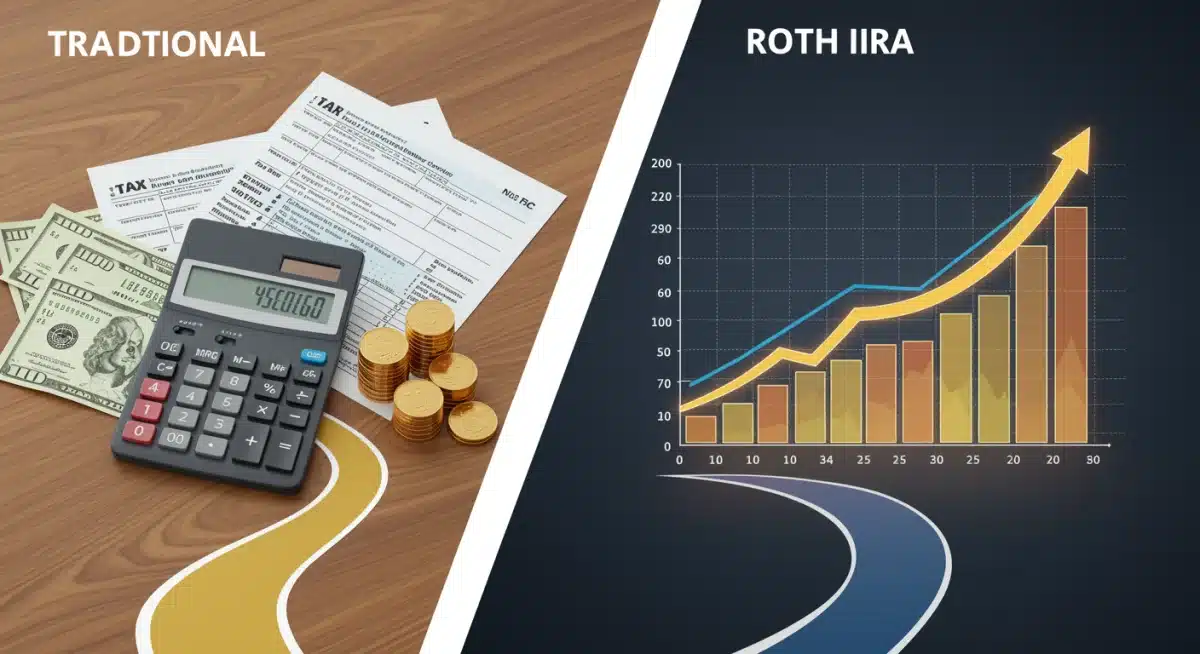
Traditional IRA vs. Roth IRA: Which One is Right for You?
To effectively maximize IRA contributions, you need to understand the fundamental differences between Traditional and Roth IRAs, as your eligibility and the immediate tax benefits vary significantly.
Traditional IRA
A Traditional IRA allows you to contribute money on a pre-tax basis, meaning your contributions may be tax-deductible in the year they are made. This can lower your taxable income in the present. The money then grows tax-deferred, and you only pay taxes when you withdraw funds in retirement. This is often advantageous for individuals who expect to be in a lower tax bracket in retirement than they are now.
Key Features of a Traditional IRA:
- Tax-Deductible Contributions: Depending on your income and whether you or your spouse are covered by a retirement plan at work, your contributions may be fully or partially tax-deductible.
- Tax-Deferred Growth: Your investments grow without being taxed annually, allowing for greater compounding.
- Taxable Withdrawals in Retirement: All distributions in retirement are taxed as ordinary income.
- Required Minimum Distributions (RMDs): You must start taking distributions at a certain age (currently 73, though this has changed and may change again).
Roth IRA
In contrast, a Roth IRA is funded with after-tax dollars. This means your contributions are not tax-deductible in the current year. However, the significant benefit is that your qualified withdrawals in retirement are completely tax-free. This makes Roth IRAs particularly appealing if you expect to be in a higher tax bracket in retirement than you are today, or if you simply prefer to pay your taxes upfront.
Key Features of a Roth IRA:
- Non-Deductible Contributions: Contributions are made with after-tax money.
- Tax-Free Growth: Your investments grow tax-free.
- Tax-Free Withdrawals in Retirement: Qualified distributions in retirement are entirely tax-free.
- No RMDs for the original owner: Unlike Traditional IRAs, Roth IRAs do not have required minimum distributions for the original owner, offering greater flexibility in retirement planning and estate planning.
- Income Limitations: Eligibility to contribute directly to a Roth IRA is subject to income limits. For 2026, these limits will be adjusted, so it’s crucial to check the most current IRS guidelines. If your income exceeds these limits, you might still be able to contribute via the “Backdoor Roth” strategy (discussed later).
Spousal IRA Contributions
If you are married and file jointly, and one spouse earns little or no income, the higher-earning spouse can contribute to an IRA on behalf of the non-working or lower-earning spouse. This is known as a Spousal IRA. This allows couples to double their retirement savings potential, effectively enabling two individuals to maximize IRA contributions even if only one has sufficient earned income. The contribution limits remain the same for each individual IRA.
Eligibility Requirements to Maximize IRA Contributions
While the contribution limits are straightforward, there are specific eligibility criteria you must meet to contribute to an IRA:
Earned Income Requirement
To contribute to either a Traditional or Roth IRA, you (or your spouse, in the case of a Spousal IRA) must have earned income. Earned income includes wages, salaries, tips, professional fees, and self-employment income. It generally does not include passive income like rental income, pension or annuity income, or deferred compensation.
- Contribution Limit: Your total IRA contributions cannot exceed your earned income for the year. For example, if you earned $5,000 in 2026, you can only contribute up to $5,000 to your IRA, even if the general limit is $7,000.
Age Limit for Traditional IRAs
There is no longer an age limit for contributing to a Traditional IRA, provided you have earned income. This is a change from previous rules and allows older individuals to continue saving for retirement.
Income Limits for Roth IRAs
Roth IRAs have income limitations for direct contributions. If your Modified Adjusted Gross Income (MAGI) exceeds certain thresholds, you may be unable to contribute directly to a Roth IRA. These limits are adjusted annually by the IRS. For 2026, it’s essential to consult the most current IRS publications or a financial advisor to determine if you fall within these income brackets. If you exceed the limits, the Backdoor Roth strategy might be an option.
Strategic Approaches to Maximize IRA Contributions
Now that you understand the basics, let’s explore practical strategies to ensure you maximize IRA contributions and hit that $7,000 or $8,000 limit.
1. Automate Your Contributions
One of the most effective ways to ensure you reach the maximum contribution is to set up automatic transfers from your checking or savings account to your IRA. Divide the annual limit by 12 (or the number of pay periods) and set up a recurring transfer.
- Monthly: To reach $7,000, contribute approximately $583.33 per month. For $8,000, it’s about $666.67 per month.
- Bi-weekly/Weekly: If you get paid more frequently, break it down further. For example, bi-weekly contributions of about $269.23 would get you to $7,000.
Automation removes the guesswork and the temptation to delay, turning contributions into a consistent habit.
2. Utilize the Tax Season Windfall
The April 15th deadline for the previous year’s contributions often coincides with tax refund season. If you receive a tax refund, consider allocating a portion or all of it directly to your IRA for the current or even the previous tax year (if it’s before the deadline). This is an excellent way to make a lump-sum contribution without feeling a pinch in your regular budget.
3. The Backdoor Roth IRA Strategy
If your income exceeds the limits for direct Roth IRA contributions, don’t despair! The Backdoor Roth IRA is a perfectly legal and popular strategy to get money into a Roth account. Here’s how it generally works:
- Contribute to a Non-Deductible Traditional IRA: First, you contribute to a Traditional IRA on a non-deductible basis. Since your income is too high to deduct contributions, you don’t claim a tax deduction for this money.
- Convert to a Roth IRA: Soon after, you convert the Traditional IRA funds to a Roth IRA.
This strategy allows high-income earners to benefit from the tax-free growth and withdrawals of a Roth IRA. However, it’s crucial to be aware of the ‘pro-rata’ rule if you have existing pre-tax Traditional IRA balances, as this can complicate the tax implications of the conversion. Consulting a tax professional is highly recommended before pursuing a Backdoor Roth, especially if you have other IRA accounts.
4. Lump-Sum Contributions When Possible
While automated contributions are great, if you receive a bonus, commission, or have an unexpected windfall, consider making a lump-sum contribution to your IRA early in the year. The sooner your money is invested, the more time it has to grow through the power of compounding. This can significantly boost your overall retirement nest egg.
5. Rebalance and Reallocate
Periodically review your investment portfolio within your IRA. While not directly about contributing, ensuring your investments are aligned with your risk tolerance and financial goals can maximize the growth potential of your contributions. Rebalancing might involve selling some assets and buying others to maintain your desired asset allocation. This proactive management helps ensure your contributions are working as hard as they can for you.
6. Understand and Avoid Contribution Penalties
It’s just as important to understand what not to do to avoid costly penalties:
- Excess Contributions: Contributing more than the annual limit can result in a 6% excise tax per year on the excess amount until it is withdrawn. Be diligent in tracking your contributions across all your IRA accounts.
- Early Withdrawals: Withdrawing funds from your IRA before age 59½ typically incurs a 10% early withdrawal penalty, in addition to income taxes (for Traditional IRAs). There are some exceptions, but generally, IRAs are meant for retirement.
Integrating IRA Contributions with Other Retirement Accounts
Your IRA isn’t typically the only component of your retirement strategy. For many, it complements employer-sponsored plans like 401(k)s, 403(b)s, or TSPs. Understanding how these accounts interact is key to a holistic retirement plan.
401(k) vs. IRA: Prioritizing Your Savings
If you have access to an employer-sponsored 401(k) (or similar plan), a common piece of advice is to first contribute enough to your 401(k) to receive the full employer match, if one is offered. This is essentially free money and an immediate 100% return on that portion of your investment.
After securing the employer match, you might then prioritize fully funding your IRA to maximize IRA contributions, especially if you prefer the investment options or tax benefits of an IRA over your 401(k). Once your IRA is maxed out, you can then return to contributing more to your 401(k) up to its higher limits.
Contribution Order Example:
- 401(k) up to employer match: Don’t miss out on free money.
- IRA up to maximum: Utilize the flexibility and potentially better investment choices of your IRA.
- 401(k) beyond match: Contribute more to your 401(k) if you have more to save, up to its higher limits ($23,000 for 2024, likely higher for 2026).
- Other accounts: Consider taxable brokerage accounts, HSAs (Health Savings Accounts), or other investment vehicles.
This sequential approach helps ensure you’re taking advantage of the most beneficial savings opportunities first.
The Power of Compounding: Why Early Contributions Matter
While the April 15th deadline for 2026 contributions gives you ample time, the single most powerful advantage you can give your retirement savings is time itself. The concept of compounding interest means that your earnings generate their own earnings, leading to exponential growth over decades.
Consider two individuals:
- Saver A: Contributes $7,000 at the beginning of 2026.
- Saver B: Contributes $7,000 just before the April 15th, 2027 deadline.
Saver A’s contribution has over a year more to grow and compound before Saver B’s money even enters the account. Over a 30-40 year investment horizon, this difference can amount to tens of thousands of dollars, purely due to the extra time in the market. This illustrates why it’s always better to maximize IRA contributions as early in the year as possible.

Monitoring Your Financial Health and Adjusting Your Plan
Financial planning is not a one-time event; it’s an ongoing process. To consistently maximize IRA contributions and optimize your retirement strategy, regular review and adjustment are essential.
Annual Financial Review
Set aside time at least once a year to review your entire financial situation. This includes:
- Income and Expenses: Has your income changed? Are your expenses under control? Identifying areas where you can save more can free up additional funds for your IRA.
- Investment Performance: How are your IRA investments performing? Are they still aligned with your risk tolerance and goals?
- Retirement Goals: Are you on track to meet your retirement goals? Do you need to increase your savings rate?
- Tax Law Changes: Stay informed about potential changes in tax laws or IRA contribution rules.
Adjusting Your Contribution Strategy
Life happens, and your financial situation can change. If you get a raise, consider increasing your automated IRA contributions. If you face unexpected expenses, you might need to temporarily adjust, but always aim to get back on track as soon as possible to maximize IRA contributions.
Seeking Professional Advice
For complex financial situations, or if you simply want personalized guidance, consider consulting a qualified financial advisor. They can help you navigate the intricacies of IRA rules, develop a comprehensive retirement plan, and ensure you’re making the most of all available tax advantages.
Common Questions About Maximizing IRA Contributions
Can I contribute to both a Traditional and a Roth IRA in the same year?
Yes, you can contribute to both a Traditional and a Roth IRA in the same year. However, your total contributions across all your IRAs for the year cannot exceed the annual contribution limit ($7,000 or $8,000 if age 50 or over). For example, if you contribute $3,000 to a Traditional IRA, you can only contribute an additional $4,000 to a Roth IRA (assuming you’re under 50).
What happens if I contribute too much to my IRA?
If you contribute more than the allowable limit, the excess contribution is subject to a 6% excise tax each year it remains in the account. To avoid this penalty, you must remove the excess contribution and any earnings attributable to it by the tax filing deadline (including extensions). If you don’t, the 6% penalty will apply every year until the excess is corrected.
Can I deduct Traditional IRA contributions if I have a 401(k)?
It depends on your Modified Adjusted Gross Income (MAGI) and whether you (or your spouse) are covered by a retirement plan at work. If your income is below certain thresholds, you may be able to deduct your Traditional IRA contributions even if you have a 401(k). If your income is above those thresholds, your deduction may be limited or eliminated. Always check the current IRS guidelines for the specific tax year.
What are the benefits of contributing early in the year?
Contributing early in the year maximizes the time your money has to grow through compounding. The longer your investments are in the market, the more potential they have to generate returns on their earnings, significantly increasing your overall retirement nest egg over time.
Is there an income limit for Traditional IRA contributions?
There is no income limit for contributing to a Traditional IRA. However, there are income limits that determine whether your Traditional IRA contributions are tax-deductible if you (or your spouse) are covered by a retirement plan at work. For non-deductible Traditional IRA contributions, there are no income limits.
Conclusion: Your Path to a Secure Retirement
Maximizing your 2026 IRA contributions is a powerful step towards building a robust and secure financial future. By understanding the contribution limits, deadlines, and the distinct advantages of Traditional and Roth IRAs, you can make informed decisions that align with your personal financial goals and tax situation. Whether you choose to automate your contributions, leverage tax refunds, explore backdoor strategies, or combine your IRA with other retirement accounts, consistency and early action are your greatest allies.
Don’t underestimate the profound impact that consistently utilizing these tax-advantaged accounts can have over decades. The $7,000 (or $8,000) limit for 2026 isn’t just a number; it’s an opportunity to significantly accelerate your wealth accumulation and enjoy a more comfortable retirement. Start planning today, set up your contributions, and ensure you hit that April 15th deadline to maximize IRA contributions and secure your financial peace of mind.