US Unemployment Rate Holds at 3.9%: What It Signals for the Q4 2026 Economic Outlook
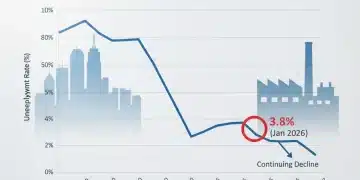
The latest economic data has once again brought the US unemployment rate into sharp focus, with figures holding steady at 3.9%. This seemingly stable number is far more than just a statistic; it’s a crucial barometer for the health of the American economy and offers significant insights into what we can expect as we approach Q4 2026. Understanding the nuances behind this figure, its historical context, and its potential implications is paramount for businesses, policymakers, and individuals alike. This comprehensive analysis will delve into the intricacies of the US unemployment outlook, exploring its impact on inflation, monetary policy, and the broader economic landscape.
Decoding the 3.9% US Unemployment Outlook: A Deeper Dive
A 3.9% US unemployment rate generally signals a robust labor market. Historically, unemployment rates below 4% are often associated with periods of strong economic growth and relatively full employment. However, the context surrounding this figure is critical. Is it a reflection of sustained job creation, or are there underlying trends that suggest a different story? To truly understand the US unemployment outlook for Q4 2026, we must look beyond the headline number.
Several factors contribute to the overall health of the labor market, including labor force participation rates, wage growth, and job openings. If the 3.9% unemployment rate is accompanied by rising labor force participation, it indicates that more people are entering the workforce and finding jobs, a positive sign. Conversely, if participation rates are stagnant or declining, the low unemployment rate might be masking a shrinking labor force, which could have long-term implications for economic potential.
Moreover, the distribution of unemployment across different sectors and demographics provides a more granular view. Are certain industries experiencing labor shortages while others face layoffs? Are particular demographic groups struggling more than others to find employment? These details are vital for understanding the true state of the US unemployment outlook and for formulating targeted economic policies.
Historical Context: How Does 3.9% Compare?
To appreciate the significance of the current US unemployment outlook, it’s helpful to place it within a historical context. The US has experienced periods of much higher unemployment, such as during the 2008 financial crisis or the COVID-19 pandemic, where rates soared into double digits. Conversely, there have been periods of even lower unemployment, though these are less common and often associated with inflationary pressures.
Comparing the current 3.9% to previous cycles helps us gauge the strength and sustainability of the present labor market. For example, during the late 1990s, the unemployment rate dipped below 4% amid a tech boom, signaling a period of rapid economic expansion. The key question for Q4 2026 is whether the current rate is indicative of a similar boom or if it’s a plateau before a potential shift.
The resilience of the labor market in recent years, even in the face of various economic headwinds, has been a notable feature. This resilience could be attributed to several factors, including adaptable businesses, technological advancements, and shifts in consumer demand. A deep understanding of these historical patterns and the current environment is essential for accurately forecasting the future US unemployment outlook.
The Interplay of Unemployment and Inflation for Q4 2026
One of the most critical relationships in macroeconomics is the inverse correlation between unemployment and inflation, often described by the Phillips Curve. When unemployment is low, as it is with a 3.9% US unemployment rate, it typically implies a tight labor market where employers must compete for workers, leading to upward pressure on wages. This wage growth, in turn, can contribute to higher production costs for businesses, which may then be passed on to consumers in the form of higher prices, fueling inflation.
For the Q4 2026 economic outlook, the question is how this dynamic will play out. If the 3.9% US unemployment outlook persists, will we see a corresponding acceleration in inflation, or have other factors, such as supply chain normalization or productivity gains, mitigated this risk? The Federal Reserve, in particular, will be closely watching these indicators as it calibrates its monetary policy.
Moreover, expectations for future inflation also play a significant role. If businesses and consumers anticipate higher prices, they may adjust their behavior accordingly, leading to a self-fulfilling prophecy. Therefore, managing inflation expectations while maintaining a healthy labor market is a delicate balancing act for central banks. The 3.9% US unemployment rate presents both an opportunity for continued economic growth and a potential challenge in managing inflationary pressures as we look ahead to Q4 2026.
Monetary Policy Implications: The Fed’s Dilemma
The Federal Reserve’s dual mandate is to achieve maximum employment and stable prices (low and stable inflation). A 3.9% US unemployment rate, while indicating strong employment, can complicate the Fed’s task if inflationary pressures remain elevated or begin to accelerate. The central bank’s response to the current US unemployment outlook will be a defining factor for the Q4 2026 economy.
If the Fed perceives the low unemployment rate as a sign of an overheating economy that could lead to persistent inflation, it might opt for a tighter monetary policy, potentially through interest rate hikes. Higher interest rates can cool down economic activity by making borrowing more expensive for businesses and consumers, thereby reducing demand and, consequently, inflationary pressures. However, this approach carries the risk of slowing economic growth too much, potentially leading to a rise in the unemployment rate.
Conversely, if the Fed believes that inflation is under control or that the economy faces other headwinds, it might maintain a more accommodative stance, keeping interest rates stable or even considering cuts if growth falters. The challenge for the Fed lies in accurately assessing whether the 3.9% US unemployment rate is sustainable without triggering excessive inflation, or if it signals a need for proactive measures to prevent future instability. Their decisions in the coming quarters will significantly shape the Q4 2026 economic outlook.
Sectoral Analysis: Who’s Hiring and Who’s Not?
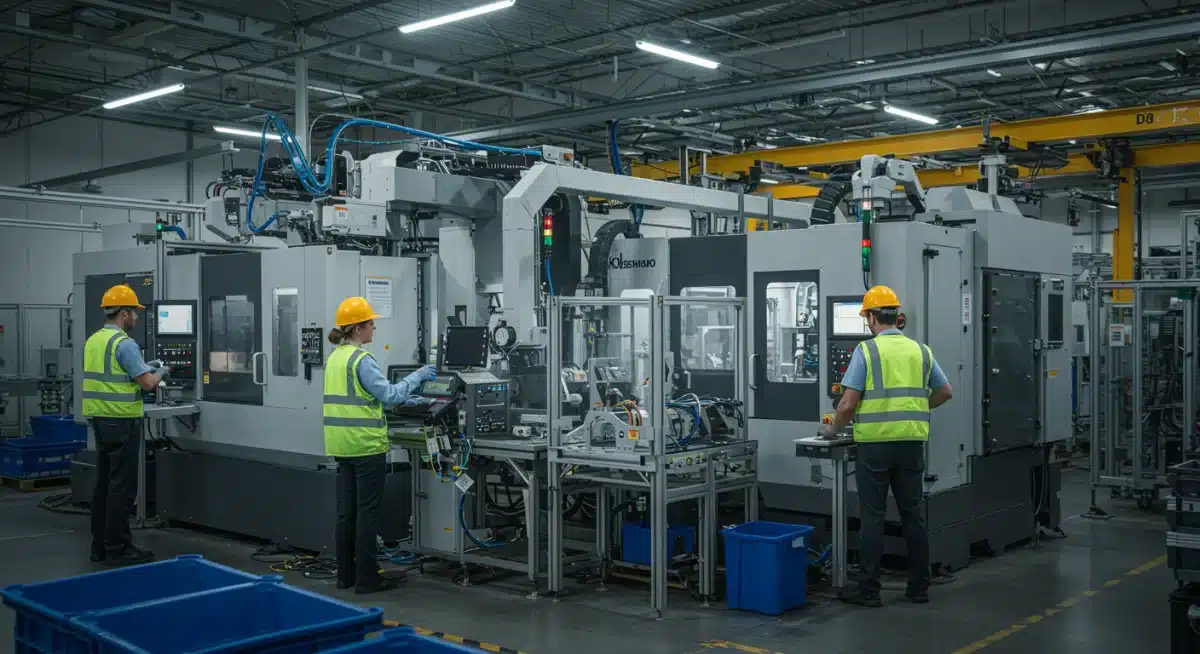
A broad US unemployment rate of 3.9% can conceal significant variations across different sectors of the economy. A detailed sectoral analysis is crucial for understanding the true health and future direction of the labor market. For instance, the technology sector might be experiencing rapid growth and high demand for skilled workers, while traditional manufacturing or retail sectors could be facing automation challenges or shifting consumer preferences.
Examining job growth by industry can reveal areas of strength and potential vulnerability. Are industries vital for future economic growth, such as renewable energy, AI, or advanced manufacturing, seeing robust hiring? Or is the job growth concentrated in lower-wage service sectors? The answers to these questions will inform the long-term US unemployment outlook and overall economic resilience.
Furthermore, understanding the types of jobs being created – full-time versus part-time, permanent versus temporary – also provides valuable context. A healthy labor market typically sees a high proportion of full-time, permanent positions. Any shift towards less stable employment could indicate underlying weaknesses, even with a low headline unemployment rate. This granular view is indispensable for a comprehensive Q4 2026 economic outlook.
Wage Growth and Labor Market Dynamics
Another key indicator to consider alongside the 3.9% US unemployment rate is wage growth. In a tight labor market, workers typically have more bargaining power, leading to higher wages. This is generally a positive development, as it increases household income and supports consumer spending, which is a major driver of economic growth.
However, excessive wage growth, especially if it outpaces productivity gains, can contribute to inflationary pressures. Businesses facing higher labor costs might pass these costs onto consumers, leading to a wage-price spiral. Therefore, policymakers closely monitor the balance between wage growth and productivity when assessing the US unemployment outlook.
The composition of wage growth also matters. Is it broad-based across all income levels and sectors, or is it concentrated among highly skilled workers? Disparities in wage growth can exacerbate income inequality, which has its own set of economic and social implications. For Q4 2026, understanding these wage dynamics will be crucial for predicting consumer behavior and overall economic stability.
The Role of Labor Force Participation Rate
While the US unemployment rate measures the percentage of the labor force that is unemployed and actively looking for work, the labor force participation rate (LFPR) measures the proportion of the working-age population that is either employed or actively seeking employment. A low unemployment rate coupled with a declining LFPR can be misleading, as it might indicate that people are leaving the workforce rather than finding jobs.
Factors influencing the LFPR include demographic shifts (e.g., an aging population), educational attainment, and social trends. For the Q4 2026 outlook, it’s important to analyze whether the LFPR is stabilizing or recovering from past declines. A rising LFPR alongside a stable 3.9% US unemployment rate would be a very strong signal of a healthy and expanding labor market.
Conversely, if the LFPR continues to decline, it could point to long-term challenges for economic growth, as a smaller proportion of the population is contributing to production. This would also put more pressure on the remaining workforce to support a larger dependent population. Therefore, the LFPR is a critical complementary metric to the US unemployment outlook.
Global Economic Factors and the US Unemployment Outlook
The US economy does not operate in a vacuum. Global economic conditions can significantly impact the domestic labor market. International trade, geopolitical events, and economic growth in other major economies can all influence the US unemployment outlook for Q4 2026.
For example, a slowdown in global demand could reduce export opportunities for US businesses, potentially leading to job losses in export-oriented industries. Conversely, strong global growth could boost demand for American goods and services, supporting job creation. Supply chain disruptions, often triggered by international events, can also affect production and employment levels.
Furthermore, shifts in global capital flows and investor sentiment can impact domestic investment, which in turn affects job creation. Therefore, any comprehensive forecast of the US unemployment outlook must consider these intricate global interdependencies. The stability of the 3.9% rate will be tested by both domestic and international forces.
Technological Advancements and Future of Work
The accelerating pace of technological advancement, particularly in areas like artificial intelligence, automation, and robotics, is fundamentally reshaping the labor market. While these technologies can boost productivity and create new types of jobs, they also pose challenges by potentially displacing workers in certain sectors.
For the Q4 2026 economic outlook, it’s vital to assess how these technological shifts are influencing the US unemployment outlook. Are educational and training systems adapting quickly enough to equip the workforce with the skills needed for future jobs? Is there sufficient investment in reskilling and upskilling programs to help displaced workers transition to new roles?
The impact of technology is not uniform; some industries will be more affected than others. Understanding these dynamics is crucial for anticipating future employment trends and ensuring that the benefits of technological progress are broadly shared across the workforce. The 3.9% US unemployment rate could mask significant underlying shifts in job composition.

Policy Responses and Government Initiatives
Government policies play a significant role in shaping the US unemployment outlook. Fiscal policies, such as government spending on infrastructure, tax cuts, or social programs, can stimulate demand and create jobs. Labor market policies, including minimum wage laws, unemployment benefits, and workforce development programs, also have a direct impact on employment levels and conditions.
As we approach Q4 2026, policymakers will be evaluating the effectiveness of current initiatives and considering new approaches to maintain a healthy labor market. For instance, investments in green energy or digital infrastructure could create new job opportunities. Policies aimed at improving access to education and training can enhance labor force skills and adaptability.
The balance between fiscal prudence and economic stimulus will be a key debate. Governments will need to carefully weigh the potential benefits of intervention against the risks of increased national debt or inflationary pressures. The 3.9% US unemployment rate provides a relatively strong foundation, but proactive policy adjustments will still be necessary to navigate future challenges and ensure sustained economic health.
Consumer Confidence and Spending Habits
Consumer confidence and spending are powerful drivers of economic activity. When people feel secure in their jobs and optimistic about their financial future, they are more likely to spend, which in turn stimulates demand for goods and services, leading to increased production and job creation. A stable 3.9% US unemployment rate typically fosters high consumer confidence.
For the Q4 2026 economic outlook, tracking consumer sentiment will be crucial. Are households feeling financially secure enough to make major purchases, such as homes or cars, or are they becoming more cautious? Factors like inflation, interest rates, and job security all influence consumer spending habits.
Any significant shift in consumer confidence could either reinforce the current positive US unemployment outlook or signal a potential slowdown. Businesses rely on strong consumer demand to justify hiring and investment decisions, making this a critical area of observation for economic forecasters.
Investment and Business Expansion
Business investment is another cornerstone of economic growth and job creation. When businesses are confident about future demand and profitability, they are more likely to invest in new equipment, technology, and facilities, which directly translates into job opportunities. A low and stable US unemployment rate, such as 3.9%, often encourages business expansion due to perceived economic stability and strong consumer demand.
For the Q4 2026 outlook, it’s important to monitor trends in business investment. Are companies expanding their operations, or are they adopting a more cautious wait-and-see approach? Factors like corporate tax policies, access to credit, and regulatory environments can all influence investment decisions.
Furthermore, the nature of investment matters. Is it primarily focused on efficiency gains through automation, which might displace some workers, or is it geared towards expanding capacity and creating new jobs? The answers to these questions will provide valuable insights into the long-term US unemployment outlook and the economy’s productive capacity.
Risks and Headwinds for the Q4 2026 Outlook
While the 3.9% US unemployment rate paints a picture of a strong labor market, several risks and headwinds could influence the Q4 2026 economic outlook. These include geopolitical instability, unexpected economic shocks (e.g., new global health crises, energy price spikes), and persistent inflationary pressures.
A significant downturn in global trade, for example, could reduce demand for US exports and impact domestic industries. Escalating geopolitical tensions could disrupt supply chains, increase commodity prices, and dampen investor confidence. Domestically, a resurgence of inflation could force the Federal Reserve to adopt a more aggressive monetary policy, potentially slowing economic growth and impacting the US unemployment outlook.
Moreover, structural issues within the labor market, such as skills mismatches or declining labor force participation among certain groups, could become more pronounced over time. While the current 3.9% unemployment rate is favorable, a robust Q4 2026 outlook requires vigilance against these potential challenges and proactive measures to mitigate their impact.
Conclusion: Navigating the Future of the US Unemployment Outlook
The US unemployment rate holding at 3.9% is a significant data point, offering a complex yet generally positive signal for the Q4 2026 economic outlook. It suggests a resilient labor market that has weathered various economic challenges. However, a superficial interpretation of this number risks overlooking critical underlying trends and potential future challenges.
A comprehensive understanding of the US unemployment outlook requires a deep dive into labor force participation, wage dynamics, sectoral performance, and the interplay with inflation and monetary policy. Furthermore, global economic conditions, technological advancements, and government initiatives will all play a crucial role in shaping the future of employment in the United States.
As we move towards Q4 2026, the ongoing stability of the 3.9% unemployment rate will be a key indicator of continued economic health. However, vigilance against inflationary pressures, adaptability to technological shifts, and strategic policy decisions will be paramount to ensure that the American economy not only maintains its current strength but also fosters sustainable and equitable growth for all. The journey ahead involves navigating these complexities with informed perspectives and proactive strategies to solidify a robust US unemployment outlook.