Education Technology Trends 2026: What Every Student and Educator Needs to Know
The landscape of education is in constant flux, a dynamic environment shaped by pedagogical advancements, societal shifts, and, perhaps most significantly, technological innovation. As we cast our gaze towards 2026, the pace of change in education technology, or EdTech, shows no signs of slowing. Instead, it’s accelerating, bringing forth a wave of transformative tools and methodologies that promise to redefine learning and teaching as we know it. For students, these advancements mean more engaging, personalized, and accessible educational experiences. For educators, they offer powerful new avenues for instruction, assessment, and professional development. Understanding these education technology trends is not just about staying current; it’s about preparing for the future, ensuring that educational institutions can adapt, thrive, and provide the best possible learning environments.
In this comprehensive guide, we will delve into the most impactful education technology trends projected to dominate the educational sphere by 2026. We’ll explore the underlying principles, practical applications, and potential challenges associated with each trend. Our aim is to equip both students and educators with the knowledge needed to navigate this evolving digital landscape, to harness the power of new technologies, and to foster a more effective, equitable, and inspiring educational journey for all.
The Rise of Artificial Intelligence (AI) in Education
Artificial Intelligence (AI) is no longer a futuristic concept confined to science fiction; it is a tangible force already reshaping numerous industries, and education is certainly among them. By 2026, AI is expected to be deeply embedded in various aspects of the learning process, offering unparalleled opportunities for personalization, efficiency, and insight. The impact of AI on education technology trends cannot be overstated, as it promises to revolutionize how content is delivered, how students learn, and how educators manage their classrooms.
Personalized Learning Pathways Powered by AI
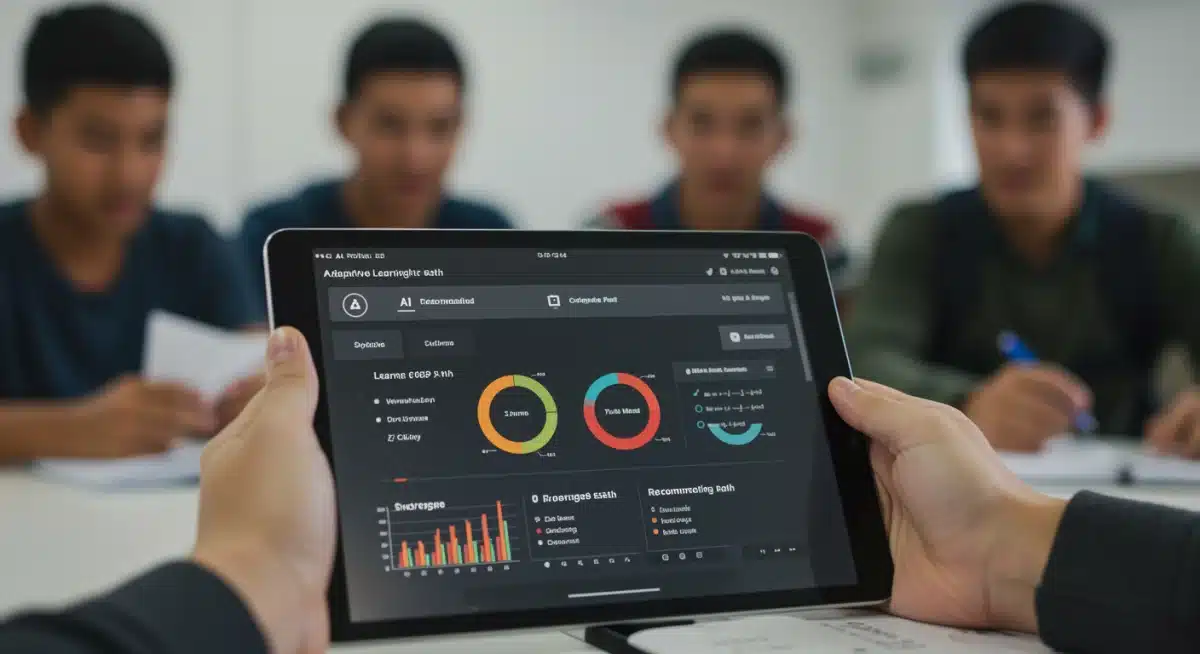
One of the most significant contributions of AI to education is its ability to facilitate truly personalized learning. Traditional education often struggles with a one-size-fits-all approach, which can leave some students behind and others unchallenged. AI-driven platforms, however, can analyze a student’s learning style, pace, strengths, and weaknesses in real-time. Based on this data, they can dynamically adjust content, recommend specific resources, and create bespoke learning pathways tailored to individual needs. This adaptive learning approach ensures that every student receives instruction that is optimally suited to their cognitive profile, maximizing engagement and retention. Imagine an AI tutor that understands precisely where a student is struggling and provides targeted exercises and explanations, rather than generic ones. This is the promise of AI in personalized learning, a core component of future education technology trends.
AI-Powered Assessment and Feedback
Assessment is a critical component of the educational process, but it can be time-consuming for educators. AI is poised to transform assessment by automating grading for certain types of assignments, providing instant feedback to students, and even identifying patterns in student errors that might indicate broader learning gaps. For example, AI algorithms can analyze essays for grammar, style, and coherence, offering constructive criticism far more rapidly than a human can. This frees up educators to focus on more complex, qualitative assessments and to provide deeper, more meaningful interactions with students. The ability of AI to offer immediate, actionable feedback is a game-changer, allowing students to learn from their mistakes in real-time and iterate on their understanding more effectively. This efficiency in assessment is a key driver among emerging education technology trends.
Intelligent Tutoring Systems and Chatbots
AI-powered intelligent tutoring systems and educational chatbots are becoming increasingly sophisticated. These systems can provide 24/7 support, answer student questions, clarify concepts, and even engage in Socratic dialogue to deepen understanding. They can act as supplementary resources, offering additional explanations or practice problems outside of classroom hours. For educators, these tools can offload some of the repetitive question-answering tasks, allowing them to dedicate more time to complex instructional design and individual student support. The development of more natural language processing capabilities means these AI tutors can interact with students in a more human-like and empathetic manner, making learning support more accessible and less intimidating. This advancement in direct student support is a vital aspect of the evolving education technology trends.
AI for Administrative Efficiency and Data Analytics
Beyond direct instruction, AI can significantly enhance administrative efficiency in educational institutions. From automating scheduling and resource allocation to managing student records and predicting student performance, AI can streamline many laborious tasks. Furthermore, AI-driven data analytics can provide educators and administrators with invaluable insights into student engagement, curriculum effectiveness, and institutional performance. By identifying trends and patterns in vast datasets, AI can help institutions make data-informed decisions to improve educational outcomes and resource utilization. This backend support from AI is crucial for creating a more responsive and efficient educational ecosystem, underscoring its broad impact on education technology trends.
Immersive Learning with Virtual and Augmented Reality (VR/AR)
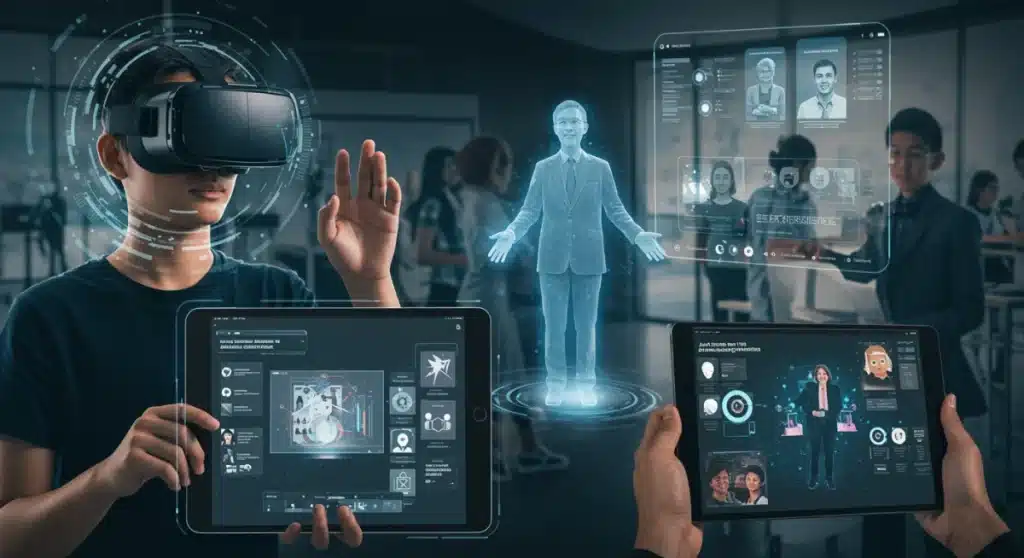
The concept of learning by doing takes on a whole new dimension with the advent of Virtual Reality (VR) and Augmented Reality (AR). These immersive technologies are poised to revolutionize how students interact with content, offering experiences that are not only highly engaging but also deeply experiential. By 2026, VR and AR will be integral to many educational settings, transforming abstract concepts into tangible realities and making learning more memorable and impactful. The integration of VR and AR is a pivotal element of future education technology trends.
Virtual Field Trips and Simulations
Imagine taking your class on a field trip to ancient Rome, exploring the Amazon rainforest, or even dissecting a frog without any ethical concerns, all from the comfort of the classroom. VR makes this possible. Virtual field trips can transport students to any location, historical period, or even microscopic world, offering rich, sensory-rich experiences that traditional textbooks cannot replicate. Similarly, VR simulations allow students to practice complex procedures in a risk-free environment, whether it’s performing surgery, operating heavy machinery, or conducting a chemistry experiment. These simulations provide hands-on experience without the dangers or costs associated with real-world practice, making them invaluable for vocational training and higher education. This experiential learning is a powerful aspect of current education technology trends.

Augmented Reality for Interactive Learning
While VR immerses users in entirely digital worlds, AR overlays digital information onto the real world. This capability opens up a wealth of possibilities for interactive learning. Students can point their tablets or smartphones at real-world objects – a human skeleton model, a historical map, or a plant – and see superimposed digital layers that provide additional information, 3D models, or interactive elements. For example, an AR app could display the circulatory system pulsing over a diagram of the human body, or show the layers of the Earth’s crust as students examine a rock. AR enhances the learning environment by making it more interactive and providing contextually relevant information instantly. This blending of the physical and digital is a compelling aspect of evolving education technology trends.
Challenges and Opportunities in VR/AR Adoption
Despite their immense potential, the widespread adoption of VR/AR in education still faces challenges, including the cost of hardware, the need for robust content development, and ensuring equitable access. However, as technology advances and costs decrease, these barriers are steadily being overcome. The opportunities, particularly for students with diverse learning needs, are immense. VR/AR can provide alternative modes of engagement for students who struggle with traditional learning methods, offering visual, kinesthetic, and auditory pathways to understanding. The continued development and integration of these technologies are central to future education technology trends.
The Growth of Personalized and Adaptive Learning Platforms
Building on the capabilities of AI, dedicated personalized and adaptive learning platforms are becoming increasingly sophisticated. These platforms are designed to cater to the unique learning journey of each student, moving away from the rigid structure of traditional curricula. They represent a significant shift in pedagogical thinking, focusing on student-centric approaches that empower learners to take ownership of their education. This emphasis on individual learning pathways is a defining feature of the most impactful education technology trends.
Tailored Content and Pace
Personalized learning platforms leverage AI and data analytics to deliver content that matches a student’s current understanding and learning pace. If a student grasps a concept quickly, the platform can offer more advanced material. If they struggle, it can provide remedial exercises, alternative explanations, or different formats (e.g., video instead of text). This dynamic adjustment ensures that students are always challenged appropriately, preventing boredom for advanced learners and frustration for those who need more time. The goal is to optimize the learning experience by providing the right content at the right time, a core tenet of effective education technology trends.
Data-Driven Insights for Educators
These platforms also provide educators with invaluable data-driven insights into student performance. Teachers can see at a glance which students are excelling, which are falling behind, and which specific concepts are proving difficult for the class as a whole. This granular data allows educators to intervene proactively, offer targeted support, and adjust their teaching strategies to meet collective and individual needs more effectively. The ability to quickly identify and address learning gaps is a powerful benefit, enhancing the effectiveness of instruction. Such data insights are crucial for leveraging education technology trends to their fullest potential.
Student Agency and Self-Directed Learning
Adaptive learning platforms often empower students with greater agency over their learning. While guided by algorithms, students can often choose their learning paths, explore topics of interest in greater depth, and progress at their own speed. This fosters a sense of ownership and intrinsic motivation, critical components for lifelong learning. By cultivating self-directed learning skills, these platforms prepare students for a future where continuous learning and adaptability are paramount. The promotion of student agency is a key outcome of embracing these education technology trends.
Blockchain Technology for Credentials and Records
While often associated with cryptocurrencies, blockchain technology has far-reaching applications, and its potential in education, particularly for managing credentials and records, is gaining significant traction. By 2026, we can expect to see blockchain play a more prominent role in securing academic achievements and streamlining administrative processes. This innovative application represents a secure and transparent direction for education technology trends.
Secure and Verifiable Digital Credentials
One of the most compelling uses of blockchain in education is the creation of secure, verifiable digital credentials. Diplomas, certificates, and academic transcripts can be stored on a blockchain, making them immutable and tamper-proof. This means that employers, universities, or any third party can instantly verify the authenticity of a student’s qualifications without needing to contact the issuing institution directly. This eliminates the risk of fraudulent credentials and streamlines the verification process, saving time and resources for all parties involved. The inherent security of blockchain makes it an ideal solution for safeguarding academic records, a crucial advancement in education technology trends.
Lifelong Learning Portfolios
Blockchain can also facilitate the creation of comprehensive, lifelong learning portfolios. As individuals acquire new skills and qualifications throughout their lives, these achievements can be added to a personal blockchain-based record. This creates a portable, secure, and continuously updated digital CV that is owned by the individual. It allows for a more holistic view of a person’s learning journey, encompassing formal education, professional development, and even informal learning experiences. This empowers individuals to showcase their full range of competencies and makes it easier for institutions and employers to assess skills. Such a robust system for tracking learning is a forward-thinking element of education technology trends.
Intellectual Property Protection for Educational Content
For educators and content creators, blockchain can offer enhanced protection for intellectual property. Educational materials, research papers, and digital assets can be time-stamped and recorded on a blockchain, providing an undeniable proof of ownership and creation. This can help in combating plagiarism and ensuring that creators are properly credited for their work, fostering a more secure environment for academic and creative endeavors. The application of blockchain for IP protection is an emerging but significant aspect of future education technology trends.
The Evolution of Hybrid and Blended Learning Models
The events of recent years have undeniably accelerated the adoption of hybrid and blended learning models. What was once a niche approach has now become a mainstream staple, and by 2026, these flexible learning structures will be further refined and optimized, becoming a standard component of educational delivery across all levels. The continuous evolution of these models is a central theme within current education technology trends.
Seamless Integration of Online and Offline Learning
Hybrid and blended learning models aim to combine the best aspects of face-to-face instruction with the flexibility and resources of online learning. This means creating seamless transitions between classroom activities and digital assignments, utilizing online platforms for content delivery, collaboration, and assessment, while reserving in-person time for deeper discussions, hands-on projects, and personalized support. The focus will be on creating cohesive learning experiences where the online and offline components complement each other, rather than existing as separate entities. This integrated approach is a key development in education technology trends.
Flexibility and Accessibility for Diverse Learners
These models offer unparalleled flexibility, which is particularly beneficial for diverse student populations. Students can access learning materials at their own pace and often at their own preferred times, accommodating varying schedules, geographic locations, and learning styles. This increased accessibility can be a game-changer for students who might otherwise face barriers to traditional education, including those with disabilities, working adults, or individuals in remote areas. The drive for greater inclusivity and accessibility is a powerful force behind these education technology trends.
Leveraging Technology for Enhanced Engagement
Sophisticated learning management systems (LMS), video conferencing tools, collaborative online whiteboards, and interactive digital content are all central to the success of hybrid and blended learning. Educators are increasingly leveraging these technologies not just to deliver content, but to foster active learning, peer collaboration, and real-time feedback in both synchronous and asynchronous modes. The continuous innovation in these tools ensures that hybrid learning environments remain dynamic and engaging, further solidifying their place in education technology trends.
Gamification and Game-Based Learning
The power of play as a learning tool is well-established, and by 2026, gamification and dedicated game-based learning will be more sophisticated and widely integrated into curricula. These approaches leverage the motivational elements of games to make learning more enjoyable, interactive, and effective. The integration of gaming principles is a fun and effective element of modern education technology trends.
Boosting Engagement and Motivation
Gamification involves applying game-design elements and game principles in non-game contexts. In education, this can mean awarding points, badges, leaderboards, or virtual rewards for completing assignments, participating in discussions, or mastering concepts. These elements tap into intrinsic human desires for achievement, competition, and recognition, significantly boosting student engagement and motivation. When learning feels like a challenge to be conquered rather than a chore, students are more likely to persevere and succeed. The motivational aspect is a core benefit of incorporating games into education technology trends.
Developing Problem-Solving and Critical Thinking Skills
Game-based learning, which involves using actual educational games, goes a step further. These games are designed with specific learning objectives in mind, often requiring players to solve complex problems, make strategic decisions, and think critically to progress. They provide a safe environment for experimentation and failure, allowing students to learn from mistakes without punitive consequences. From educational simulations that teach economic principles to puzzle games that enhance logical reasoning, game-based learning offers a dynamic platform for skill development. This hands-on, interactive problem-solving is a valuable contribution of education technology trends.
Personalized Challenges and Feedback
Many educational games can be integrated with adaptive learning principles, adjusting difficulty levels based on individual student performance. This ensures that the challenges remain appropriate and engaging for each learner. Furthermore, games often provide immediate, clear feedback on actions, allowing students to understand the consequences of their choices and adjust their strategies in real-time. This iterative learning process is highly effective for skill acquisition and concept mastery. The personalized challenge and feedback loop is a sophisticated feature of advanced education technology trends.
The Expansion of Microlearning and Nanodegrees
In a world characterized by rapid change and the need for continuous skill development, the traditional long-form degree is increasingly being complemented by more agile and focused learning formats. Microlearning and nanodegrees are gaining prominence, offering bite-sized, specialized education that caters to the demands of a fast-paced job market and the preferences of modern learners. This shift towards modular, focused learning is a significant aspect of contemporary education technology trends.
Efficient Skill Acquisition
Microlearning delivers educational content in small, focused units, typically lasting just a few minutes. These short bursts of learning are ideal for acquiring specific skills or knowledge points, making them highly efficient for busy professionals or students looking to quickly master a particular concept. Examples include short video tutorials, interactive quizzes, or brief explanatory modules. This approach respects learners’ limited attention spans and fits well into fragmented daily schedules. The efficiency of microlearning directly addresses the demands of integrating education technology trends into daily life.
Industry-Relevant Nanodegrees
Nanodegrees are more substantial than microlearning modules but significantly shorter and more focused than traditional degrees. They are typically offered by online platforms in partnership with industry leaders, designed to equip learners with specific, in-demand skills for particular job roles. These credentials are often project-based, emphasizing practical application and portfolio building. They offer a flexible and cost-effective alternative for career advancement or reskilling, providing verifiable qualifications that are highly valued by employers. The industry relevance of nanodegrees highlights their importance within evolving education technology trends.
Continuous Professional Development
For educators, microlearning and nanodegrees offer excellent avenues for continuous professional development. Teachers can quickly acquire new pedagogical skills, learn about emerging technologies, or deepen their expertise in specific subject areas without committing to lengthy programs. This agility allows educators to stay current with the latest research and best practices, directly benefiting their students. The accessibility of these focused learning opportunities is a boon for professional growth, aligning perfectly with progressive education technology trends.
Emphasis on Digital Citizenship and Cybersecurity Education
As technology becomes more integrated into every facet of education, the importance of teaching digital citizenship and cybersecurity cannot be overstated. By 2026, these topics will move from optional additions to core components of the curriculum, ensuring that students are not only tech-savvy but also responsible, safe, and ethical digital citizens. This focus on responsible technology use is a critical and growing area within education technology trends.
Navigating the Digital World Responsibly
Digital citizenship encompasses a wide range of topics, including online etiquette, digital literacy, media literacy (discerning fake news), digital footprint management, and understanding digital rights and responsibilities. Students need to learn how to interact respectfully online, protect their privacy, identify misinformation, and understand the implications of their digital actions. Education systems will increasingly focus on developing these crucial skills to prepare students for life in an interconnected world. The cultivation of responsible digital citizens is a fundamental goal of modern education technology trends.
Protecting Against Cyber Threats
Cybersecurity education is equally vital. With the increasing prevalence of online learning and the storage of sensitive student data, understanding basic cybersecurity principles is essential. This includes recognizing phishing scams, creating strong passwords, understanding data privacy, and knowing how to protect personal information online. For educational institutions, robust cybersecurity measures and continuous education for both staff and students are paramount to safeguarding digital environments. The proactive approach to cybersecurity is an indispensable part of current education technology trends.
Ethical AI and Data Privacy
As AI becomes more pervasive, educating students about ethical AI principles and data privacy will also become critical. Understanding how algorithms work, potential biases in AI, and the responsible use of personal data are essential for future generations. This education will empower students to critically evaluate technology and advocate for ethical digital practices. The ethical considerations surrounding AI and data are increasingly important discussions within education technology trends.
The Future is Now: Embracing Education Technology Trends
The year 2026 promises to be a pivotal moment for education, characterized by a profound integration of advanced technologies that will reshape learning and teaching. From the personalized pathways enabled by AI and the immersive experiences offered by VR/AR, to the flexible models of hybrid learning and the secure credentials provided by blockchain, the future of education is dynamic, interactive, and highly individualized. The relentless evolution of education technology trends demands continuous attention and adaptation from all stakeholders.
For students, these education technology trends mean access to more engaging, effective, and relevant learning experiences that cater to their unique needs and prepare them for future careers. For educators, they offer powerful tools to enhance instruction, streamline administrative tasks, and gain deeper insights into student progress, ultimately allowing them to focus more on meaningful interactions and pedagogical innovation. Embrace these changes, experiment with new tools, and participate in shaping an educational future that is more equitable, efficient, and inspiring for everyone involved.
The journey into this tech-enhanced educational future is not without its challenges. Issues of equitable access, teacher training, and the ethical implications of new technologies will need careful consideration and proactive solutions. However, by staying informed and adapting to these inevitable shifts, educational communities can harness the full potential of these education technology trends to create a truly transformative learning environment. The time to prepare for 2026 and beyond is now.