2026 Social Security COLA: Projected 3% Increase and Your Benefits

The projected 3% Cost-of-Living Adjustment (COLA) for 2026 Social Security benefits is a crucial factor for millions of Americans, directly influencing their financial stability and purchasing power in the face of inflation.
For millions of Americans relying on Social Security, understanding the annual Cost-of-Living Adjustment (COLA) is not merely a matter of numbers; it’s about financial security and maintaining purchasing power. As we look ahead, the projected 3% increase for the 2026 Social Security COLA holds significant implications for retirees, individuals with disabilities, and survivors. This adjustment, designed to help benefits keep pace with inflation, directly impacts household budgets and long-term financial planning. Delving into the mechanics of COLA, its historical context, and what a 3% boost truly means can provide invaluable clarity for beneficiaries nationwide.
Understanding the COLA Mechanism and Its Importance
The Cost-of-Living Adjustment, or COLA, is a vital component of the Social Security system, designed to protect beneficiaries from the eroding effects of inflation. Without COLA, the fixed dollar amount of benefits would steadily lose value over time, making it increasingly difficult for recipients to afford basic necessities. This annual adjustment ensures that the purchasing power of Social Security benefits remains relatively stable, a critical safeguard for those whose primary income source is Social Security.
The calculation of COLA is not arbitrary; it is tied directly to the Consumer Price Index for Urban Wage Earners and Clerical Workers (CPI-W). This specific index measures the average change over time in the prices paid by urban consumers for a market basket of consumer goods and services. The Social Security Administration (SSA) compares the CPI-W from the third quarter of the current year to the third quarter of the previous year. The percentage increase, if any, determines the COLA for the following year. If there is no increase, or if the CPI-W decreases, there is no COLA.
Historical Perspective of COLA Adjustments
Examining past COLA adjustments provides valuable insight into the volatility and necessity of these annual changes. Over the decades, COLA percentages have varied widely, reflecting different economic climates. Periods of high inflation, such as the late 1970s and early 1980s, saw double-digit COLA increases, while other years, particularly during periods of low inflation or deflation, resulted in minimal or no adjustments.
- High Inflation Eras: Significant COLAs during periods of rapid price increases.
- Low Inflation Eras: Modest or zero COLAs when prices remained stable.
- Impact on Beneficiaries: Direct correlation between COLA and financial stability.
- Economic Indicators: CPI-W as the primary determinant for adjustments.
The importance of COLA cannot be overstated for millions of Americans. It serves as a crucial line of defense against the rising cost of living, ensuring that Social Security benefits continue to provide a meaningful level of financial support. Understanding how COLA is calculated and its historical trajectory helps beneficiaries anticipate future adjustments and plan accordingly.
Projected 3% Increase for 2026: What It Means
The projection of a 3% Cost-of-Living Adjustment for 2026 Social Security benefits is a significant forecast that offers a glimpse into the financial landscape for millions of beneficiaries. While projections are subject to change based on actual economic data, a 3% increase would represent a notable boost to monthly payments, potentially alleviating some of the pressures from ongoing inflation.
A 3% COLA means that for every $1,000 in monthly Social Security benefits, an individual would receive an additional $30. While this might seem modest on an individual basis, cumulatively across millions of beneficiaries, it represents billions of dollars injected into the economy and directly into the pockets of those who rely on these payments. This increase is particularly impactful for those on fixed incomes, as it helps maintain their purchasing power for essential goods and services.
Impact on Average Beneficiaries
Consider an average retiree receiving approximately $1,900 per month in 2024. A 3% COLA in 2026 would translate to an increase of $57, bringing their monthly benefit to $1,957. While this may not cover all rising costs, it offers a tangible improvement in their financial standing. For individuals with disabilities or survivors, similar percentage increases would apply to their respective benefit amounts.
- Increased Purchasing Power: Helps beneficiaries afford rising costs.
- Budgeting Adjustments: Allows for better financial planning.
- Economic Stimulus: Injects funds into the consumer market.
- Protection Against Inflation: A key mechanism to preserve benefit value.
It’s important to remember that the actual COLA is determined by the CPI-W data from the third quarter of 2025. Therefore, while a 3% projection offers a valuable planning benchmark, beneficiaries should stay informed about economic trends leading up to the official announcement. The projected 3% increase underscores the ongoing need for Social Security benefits to adapt to economic realities, providing a measure of stability in an ever-changing financial environment.
How Inflationary Trends Influence COLA Projections
Inflationary trends are the primary drivers behind COLA projections and, ultimately, the actual adjustments to Social Security benefits. The very purpose of COLA is to counteract the effects of inflation, ensuring that the purchasing power of benefits doesn’t diminish over time. When the cost of goods and services rises, COLA provides a necessary increase to help beneficiaries keep pace.
The Consumer Price Index for Urban Wage Earners and Clerical Workers (CPI-W) is the specific metric used by the Social Security Administration (SSA) to measure inflation for COLA purposes. Changes in the CPI-W directly dictate whether and by how much benefits will increase. Factors influencing CPI-W include energy prices, food costs, housing expenses, and healthcare expenditures. Persistent increases in these areas lead to higher COLA projections.
Key Inflationary Factors Affecting 2026 COLA
Several economic factors contribute to the overall inflationary environment and, consequently, to COLA projections. Global supply chain issues, geopolitical events, energy market fluctuations, and domestic demand can all play a role. For the 2026 COLA, economists will be closely monitoring these elements throughout 2025 to refine their forecasts.
- Energy Prices: Volatility in oil and gas can significantly impact CPI-W.
- Food Costs: Rising food prices are a direct hit to household budgets.
- Housing Expenses: Rent and mortgage increases factor heavily into living costs.
- Healthcare Costs: Continuously increasing, influencing overall inflation.
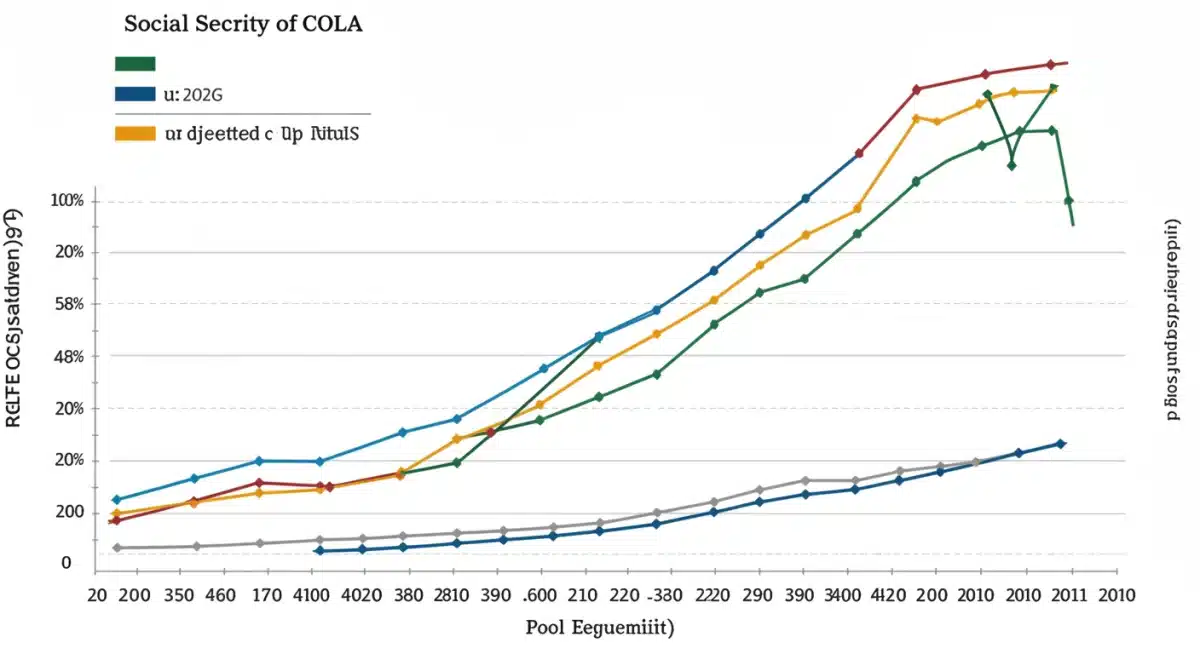
Understanding the interplay between inflationary trends and COLA is crucial for beneficiaries. High inflation erodes purchasing power, making a substantial COLA essential. Conversely, periods of low inflation result in smaller or no adjustments. The projected 3% COLA for 2026 suggests that economists anticipate a moderate but sustained level of inflation, requiring a significant adjustment to maintain beneficiaries’ financial standing.
Navigating the Impact on Retirement and Disability Benefits
A projected 3% COLA for 2026 has distinct implications for individuals receiving retirement and disability benefits. While the percentage increase is applied uniformly, its practical effect can vary based on individual circumstances, existing financial plans, and other income sources. For many, Social Security represents a primary, if not sole, source of income, making any adjustment critically important.
For retirees, a 3% increase can help cover rising daily expenses, from groceries to utilities. It also plays a role in offsetting increases in Medicare premiums, which are often deducted directly from Social Security benefits. While COLA aims to keep pace with inflation, the specific items measured by CPI-W may not perfectly align with every individual’s spending patterns, meaning some beneficiaries might still feel a squeeze.
Disability Benefits and Financial Stability
Individuals receiving Social Security Disability Insurance (SSDI) or Supplemental Security Income (SSI) also benefit from COLA. For those with disabilities, maintaining financial stability is often paramount, given potential limitations on earning additional income and higher healthcare costs. A 3% increase can provide much-needed support, helping to cover medical expenses, adaptive equipment, or specialized care.
- Increased Income: Direct boost to monthly benefit checks.
- Medicare Premium Offset: Helps mitigate rising healthcare costs.
- Budgeting Relief: Provides more flexibility for essential spending.
- Long-Term Planning: Incorporating COLA into multi-year financial forecasts.
It is essential for both retirees and those with disabilities to integrate projected COLA increases into their personal financial planning. While a 3% boost is positive, beneficiaries should also consider other factors like potential tax implications on increased benefits and how their overall financial picture might evolve. Proactive planning ensures that the COLA effectively serves its purpose in enhancing financial well-being.
Strategic Financial Planning with COLA in Mind
Understanding the projected 2026 Social Security COLA is a critical first step; the next is integrating this knowledge into a robust financial plan. For current beneficiaries and those approaching retirement, anticipating future adjustments can significantly influence budgeting, savings strategies, and investment decisions. A 3% COLA, while beneficial, requires careful consideration to maximize its positive impact and mitigate potential challenges.
One key aspect of strategic planning involves reassessing your budget. With a projected increase in Social Security income, individuals might have more flexibility to allocate funds towards essential expenses, savings, or even discretionary spending. However, it’s equally important to consider how other costs, such as healthcare, housing, and transportation, might also be increasing, potentially offsetting some of the COLA gains.
Adjusting Budgets and Savings
Financial advisors often recommend creating a detailed budget that accounts for all income sources, including Social Security benefits, and all expenditures. When a COLA is announced, revisiting this budget becomes crucial. This allows beneficiaries to see precisely how the increased income impacts their financial standing and where adjustments might be necessary.
- Reviewing Monthly Expenses: Identify areas for adjustment or optimization.
- Healthcare Cost Projections: Factor in potential Medicare premium increases.
- Emergency Savings: Consider bolstering funds with any extra income.
- Investment Rebalancing: Adjust portfolios to reflect new income streams and inflation.
Beyond immediate budgeting, long-term planning should also incorporate COLA expectations. For those still working, understanding future COLA trends can influence decisions about retirement age, continued employment, or drawing down savings. For current beneficiaries, it helps in projecting the longevity of their assets and ensuring a sustainable income stream throughout their retirement years. Strategic planning, with COLA as a central component, empowers individuals to navigate their financial future with greater confidence.
The Broader Economic Context and Future of Social Security
The projected 3% COLA for 2026 doesn’t exist in a vacuum; it is a reflection of broader economic forces and has implications for the overall health and future of the Social Security program. Understanding this larger context is essential for a complete picture of how these adjustments affect not just individual beneficiaries, but the nation’s fiscal landscape.
Inflation, as measured by the CPI-W, is intrinsically linked to economic growth, employment rates, and global market stability. A moderate COLA, like the projected 3%, suggests that while inflationary pressures are present, they are not spiraling out of control, indicating a relatively stable economic environment. However, persistent inflation at higher levels could place additional strain on the Social Security trust funds if wage growth doesn’t keep pace.
Long-Term Solvency and Policy Debates
The financial sustainability of Social Security is a perennial topic of discussion. While COLAs are designed to protect beneficiaries, they also contribute to the total outlay from the trust funds. The program faces long-term solvency challenges due to demographic shifts, such as increasing life expectancies and lower birth rates, which lead to a smaller worker-to-beneficiary ratio.
- Trust Fund Status: COLAs impact the longevity of Social Security funds.
- Demographic Challenges: Aging population strains the system.
- Policy Reforms: Potential adjustments to benefits or taxation.
- Economic Growth: Strong economy supports higher wages and contributions.
Debates around Social Security often revolve around potential policy reforms, such as adjusting the full retirement age, modifying how COLA is calculated, or increasing the Social Security tax base. While these are complex issues, awareness of the broader economic and political context surrounding COLA helps beneficiaries understand the forces shaping their future benefits. The 2026 COLA projection serves as a reminder of the dynamic nature of Social Security and its integral role in the financial lives of millions of Americans.
| Key Aspect | Brief Description |
|---|---|
| Projected COLA 2026 | Forecasted 3% increase in Social Security benefits to offset inflation. |
| COLA Calculation | Based on the Consumer Price Index for Urban Wage Earners and Clerical Workers (CPI-W). |
| Beneficiary Impact | Directly affects purchasing power for retirees, disabled, and survivors. |
| Financial Planning | Crucial for budgeting and long-term financial stability. |
Frequently Asked Questions About 2026 COLA
The current projection for the 2026 Social Security Cost-of-Living Adjustment (COLA) is approximately 3%. This figure is an estimate and is subject to change based on economic data, particularly inflation rates, up until the official announcement in late 2025.
COLA is calculated based on the Consumer Price Index for Urban Wage Earners and Clerical Workers (CPI-W). The Social Security Administration compares the average CPI-W from the third quarter of the current year to the third quarter of the previous year. The percentage increase determines the COLA.
All Social Security beneficiaries, including retirees, individuals receiving disability benefits (SSDI), and survivors, will see their monthly payments increase by the COLA percentage. This adjustment helps maintain their purchasing power against inflation.
While COLA increases your Social Security benefit, Medicare Part B premiums are often deducted from these benefits. An increase in COLA may help offset any potential rise in Medicare premiums, though the exact impact varies by individual and premium amounts.
The official Cost-of-Living Adjustment for 2026 is typically announced by the Social Security Administration in October of 2025. This announcement follows the release of the third-quarter CPI-W data, which is the final piece of the calculation.
Conclusion
The projected 3% Cost-of-Living Adjustment for 2026 Social Security benefits represents more than just a numerical increase; it signifies a crucial mechanism designed to safeguard the financial well-being of millions of Americans. By understanding how COLA is calculated, its historical significance, and its direct impact on retirement, disability, and survivor benefits, beneficiaries can better plan for their financial future. While projections offer a valuable guide, staying informed about economic indicators and making proactive adjustments to personal budgets remain key to maximizing the benefits of COLA and ensuring sustained purchasing power in an evolving economic landscape.